 EN
EN


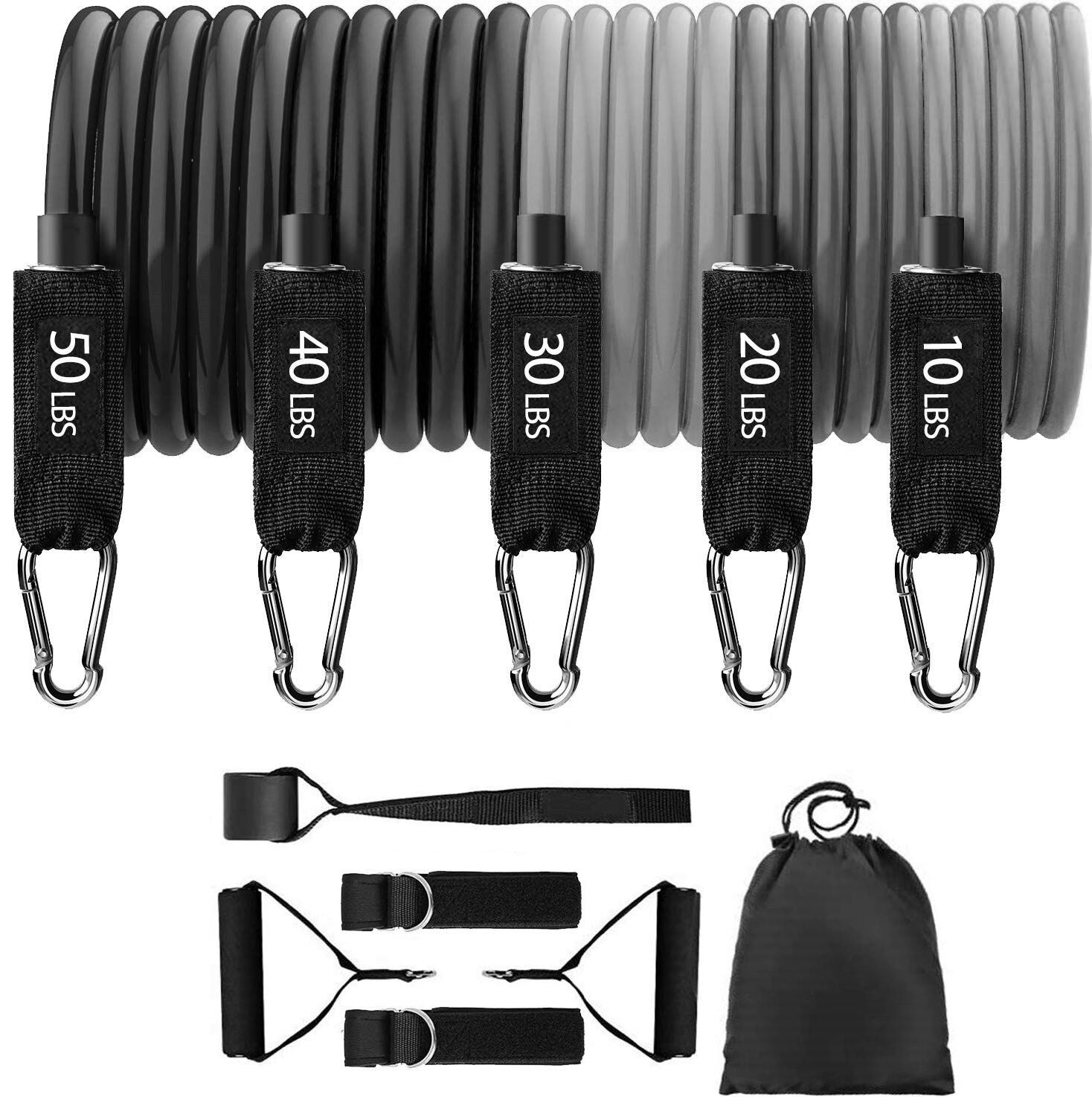
For buyers, trainers, and facility managers, the real question behind resistance tubes vs free weights is not which tool is universally better, but which tool fits a specific training environment, risk profile, and user population. In most B2B settings, equipment decisions affect onboarding speed, floor space efficiency, maintenance overhead, and programming consistency across different fitness levels. That is why resistance tubes vs free weights should be evaluated as a practical operating choice, not just a training preference. A clear comparison helps you align equipment investment with outcomes such as adherence, safety, and coaching efficiency.
At a high level, resistance tubes vs free weights comes down to tradeoffs. Resistance tubes provide portability, variable tension, and lower entry barriers for many users, while free weights provide straightforward load progression, stable external resistance, and well-established strength standards. Neither side wins every category. The strongest procurement and programming decisions come from understanding where resistance tubes vs free weights differ in mechanics, coaching demands, user confidence, and long-term scalability.
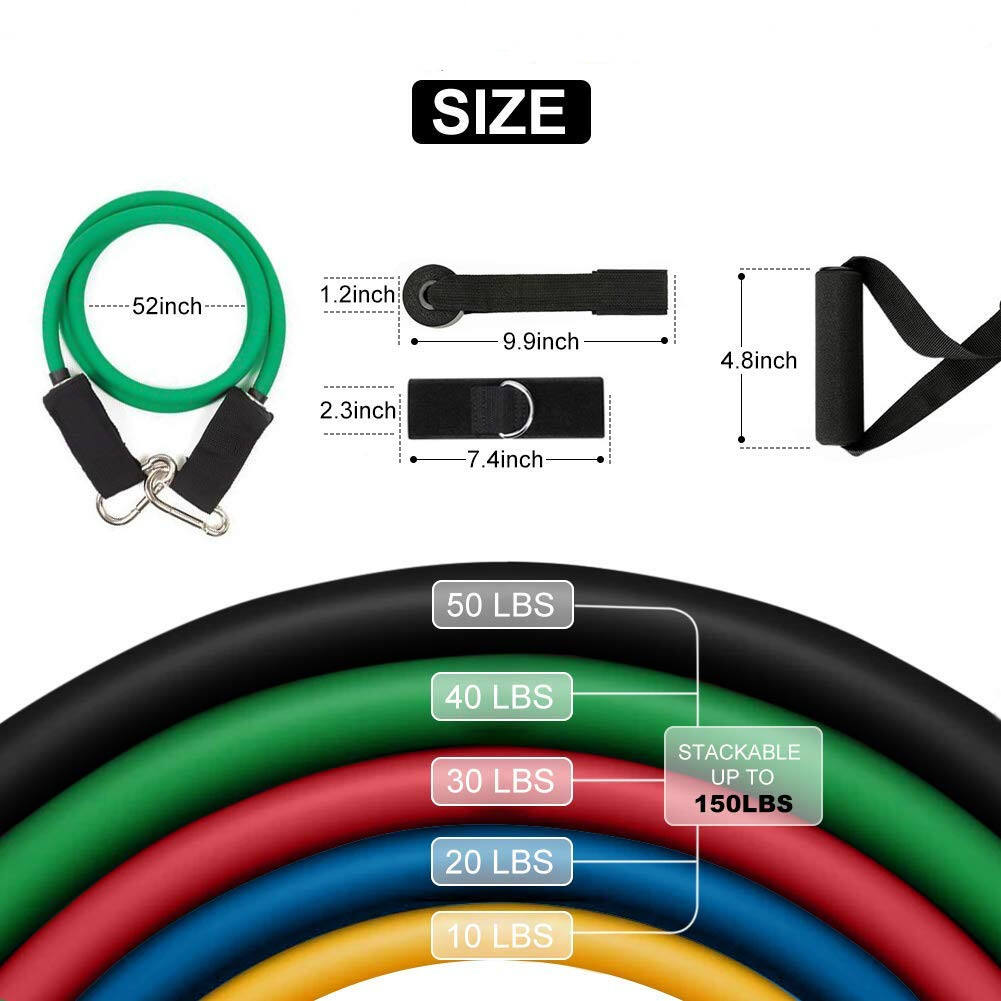
Core Differences in Training Mechanics and User Experience
How external resistance is delivered
The first technical distinction in resistance tubes vs free weights is how force is applied through the movement. Free weights rely on gravity and a relatively predictable load curve, while resistance tubes increase tension as the band stretches. This means that in resistance tubes vs free weights comparisons, the same nominal effort can feel very different at different phases of a repetition. For coaches, that affects exercise selection and cueing quality.
In practical terms, resistance tubes can reduce perceived strain in weaker joint angles and increase challenge near lockout, which may support motor confidence in novice users. Free weights often demand higher control at the bottom of many lifts because the load is fully present from the start. When teams analyze resistance tubes vs free weights, this difference is central to deciding which modality supports rehabilitation-adjacent training, general fitness onboarding, or performance-focused strength blocks.
Movement control, stability, and learning curve
A second key factor in resistance tubes vs free weights is stability demand. Free weights typically require coordinated bracing, grip control, and joint positioning under fixed external load. Resistance tubes can still challenge stability, but they often let users slow down and adjust tension quickly, which can reduce intimidation for first-time participants. In resistance tubes vs free weights planning, this affects session flow and instructor intervention frequency.
For multi-user settings, learning curve matters because inconsistent technique increases supervision cost. Many programs find that resistance tubes allow users to understand push, pull, and hinge patterns with fewer failed reps and less fear. Free weights remain essential for developing robust load handling skills, but in resistance tubes vs free weights strategy, early adherence often improves when users can progress without feeling overexposed to heavy external load on day one.
Operational Advantages of Resistance Tubes in B2B Settings
Space efficiency, portability, and deployment speed
From an operations perspective, resistance tubes vs free weights often starts with footprint. Resistance tube systems can be stored compactly and deployed in flexible zones, while free weights require dedicated racks, clear lifting lanes, and stricter spatial control. For facilities with changing room layouts or mixed-use schedules, resistance tubes vs free weights analysis usually favors tubes for deployment flexibility and faster class transitions.
Portability also supports distributed training models. Corporate wellness teams, small studios, and mobile coaching services can carry tube-based kits between sites with minimal logistics friction. This is one reason many buyers exploring resistance tubes vs free weights evaluate resistance tubes vs free weights through a total-access lens, where usable training capacity matters more than maximum absolute load in a single room.
Lower onboarding friction and broader participant inclusion
In population-based programs, resistance tubes vs free weights is strongly influenced by participation behavior. Resistance tubes are often less intimidating for sedentary users, older adults, and employees returning after long training gaps. That psychological accessibility can improve first-month attendance, which is a leading indicator of retention. In resistance tubes vs free weights implementation, this can produce stronger engagement outcomes even when absolute load progression is slower.
Coaches also report smoother mixed-level sessions when tube resistance can be scaled rapidly by stance, anchor position, and band combinations. Free weights scale effectively too, but plate and dumbbell availability can become a bottleneck in crowded sessions. When deciding resistance tubes vs free weights for high-throughput classes, quick micro-adjustments often reduce idle time and keep session intensity more consistent across participants.
Limitations and Tradeoffs You Should Not Ignore
Load quantification and progression precision
One important drawback in resistance tubes vs free weights is measurement precision. Free weights provide clear load values, making progression tracking straightforward for both clients and coaches. Resistance tubes can be progressed, but exact tension varies with stretch distance, anchor setup, and movement path. In resistance tubes vs free weights decisions, this can complicate long-cycle strength planning for users who need tightly defined overload targets.
For performance-oriented environments, this limitation may reduce comparability between sessions unless protocols are tightly standardized. Teams can mitigate this with consistent setup markers and repetition tempo rules, but the management burden rises. That is why resistance tubes vs free weights often results in hybrid programming, using tubes for accessory work and free weights for primary strength benchmarks.
Durability management and user safety controls
Durability is another practical issue in resistance tubes vs free weights. Free weights can last for years with basic maintenance, while resistance tubes are consumable components that degrade over time depending on usage frequency, storage conditions, and material quality. In resistance tubes vs free weights budgeting, replacement cycles should be treated as planned operating costs rather than unexpected losses.
Safety protocols differ as well. Tube systems require inspection routines for cracks, anchor security checks, and coaching on recoil awareness. Free weights require spotter logic, drop-zone control, and strict lift etiquette. A realistic resistance tubes vs free weights policy accounts for these different risk patterns and assigns clear responsibility for pre-session checks, user education, and retirement criteria for worn equipment.
A Practical Selection Framework for Industrial and Commercial Buyers
Matching equipment to program goals and user profiles
The most effective way to resolve resistance tubes vs free weights is to map tools to outcomes. If your primary objective is broad participation, flexible delivery, and low-friction onboarding, tubes often deliver faster operational wins. If your objective is measurable maximal strength progression with standardized loading, free weights remain foundational. In resistance tubes vs free weights planning, goal clarity should come before product volume decisions.
User profile segmentation also improves purchase accuracy. Novice-heavy populations often respond well to tube-first progressions, while experienced lifters usually require free-weight exposure for continued adaptation. Many organizations settle resistance tubes vs free weights by tiering programs: foundational movement and activation with tubes, then progressive strength blocks with free weights as competence rises.
Building a hybrid model that protects ROI
For many B2B environments, the strongest answer to resistance tubes vs free weights is not either-or, but planned integration. Hybrid models improve space efficiency, reduce queueing around limited heavy equipment, and expand exercise variety without major facility redesign. This approach also supports continuity during peak times, remote coaching phases, or temporary space constraints. In resistance tubes vs free weights economics, versatility often protects ROI better than a single-modality strategy.
Implementation works best when procurement, coaching SOPs, and maintenance protocols are aligned from the start. Define where each modality is mandatory, optional, or excluded based on user readiness and session objectives. By operationalizing resistance tubes vs free weights as a system decision rather than a product decision, organizations create more stable training quality and fewer preventable disruptions.
FAQ
Are resistance tubes enough for full-body strength development in commercial programs?
Yes, for many general-fitness populations, resistance tubes can train all major movement patterns and support meaningful strength gains. In resistance tubes vs free weights, tubes are especially effective for beginners, high-repetition strength endurance work, and accessory training. However, for advanced maximal strength targets, free weights usually provide clearer heavy-load progression and easier benchmarking over time.
Do free weights always produce better results than resistance tubes?
Not always. In resistance tubes vs free weights, results depend on the training goal, user consistency, and program design quality. Free weights can be superior for absolute load development, while tubes can outperform in adherence, session flexibility, and scalable group delivery. Better results come from the right tool for the right context, not from a universal hierarchy.
How should facilities manage risk when using resistance tubes at scale?
Risk control in resistance tubes vs free weights requires modality-specific procedures. For tubes, apply routine inspection schedules, clear anchor standards, and replacement thresholds tied to visible wear. For free weights, maintain floor management, spotting protocols, and coaching oversight for complex lifts. A written SOP with staff accountability is the most reliable way to keep both modalities safe in daily operations.
What is the best procurement approach when budgets are limited?
When budgets are tight, resistance tubes vs free weights decisions should prioritize program reach and usage efficiency first. Start with a core set that enables high participation and consistent coaching delivery, then add free-weight capacity where measurable heavy progression is required. This phased model reduces idle inventory, supports faster launch timelines, and keeps expansion aligned with proven participant demand.