 EN
EN



A resistance tube is one of the most effective tools available for enhancing muscle activation efficiency during exercise. Unlike fixed-weight machines or free weights, a resistance tube creates variable tension that increases as the elastic is stretched, forcing muscles to engage more completely throughout every degree of a movement. This unique mechanical property makes the resistance tube especially valuable for anyone seeking deeper neuromuscular engagement without the need for heavy loads or gym equipment.
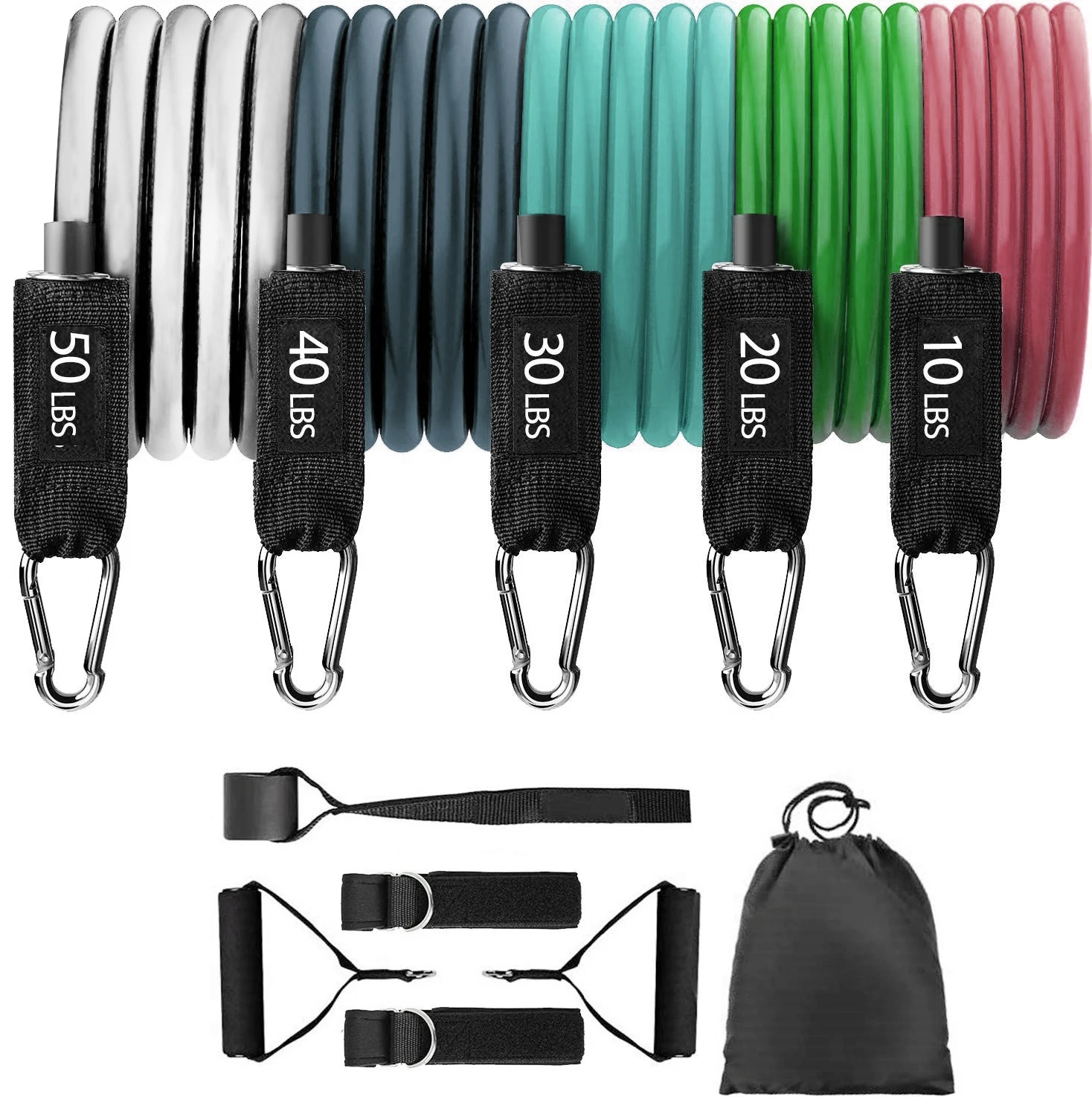
Understanding why the resistance tube enhances muscle activation efficiency requires looking at how elastic resistance interacts with the body's natural strength curve. Most muscles are weakest at the beginning of a movement and strongest near the midpoint or end range. A resistance tube naturally accommodates this curve by providing lighter tension at the start and progressively greater tension as the movement advances. The result is continuous muscular demand throughout the entire range of motion, which is the core reason resistance tube training consistently delivers high-quality activation compared to many conventional training tools.
The Science Behind Resistance Tube Muscle Activation
Variable Resistance and the Strength Curve
Every resistance tube exercise generates what exercise scientists call 'accommodating resistance.' As you extend or compress a muscle through its range, the resistance tube increases tension proportionally. This means muscles cannot simply coast through the easier parts of a rep. Every phase of the movement demands genuine muscular effort, which stimulates a broader pool of motor units and muscle fibers compared to traditional constant-load exercises. For athletes and rehabilitation patients alike, this results in more thorough and efficient muscle activation per repetition.
The resistance tube also encourages the nervous system to develop better coordination between stabilizer muscles and primary movers. When the elastic load shifts during a resistance tube exercise, the body must constantly recalibrate tension, balance, and control. This neuromuscular challenge is central to why resistance tube training improves functional strength rather than just isolated muscle size.
Continuous Tension and Time Under Load
Time under tension is a well-documented driver of muscle adaptation. A resistance tube maintains constant elastic load even during the eccentric or lowering phase of a movement, which is often neglected in free-weight training. When you return to the starting position during a resistance tube exercise, the elastic still pulls against you, forcing the target muscles to work during deceleration. This extended time under tension leads to greater microscopic muscle stress, higher metabolic demand, and ultimately better activation efficiency over repeated training sessions.
How Resistance Tube Training Enhances Specific Muscle Groups
Upper Body Activation Patterns
For upper body training, the resistance tube excels at activating the posterior chain muscles of the shoulder, upper back, and rotator cuff. Movements such as resistance tube rows, face pulls, and external rotation drills force the scapular stabilizers and rear deltoids to maintain sustained contraction throughout each repetition. These muscles are frequently underactivated in pressing-dominant gym programs, making resistance tube exercises an ideal corrective and supplemental tool. Because the resistance tube can be anchored at variable heights, exercises can be performed at angles that closely mimic real-world movement patterns, further improving functional muscle engagement.
Bicep curls, tricep extensions, and chest presses performed with a resistance tube also demonstrate higher stabilizer co-contraction compared to the same movements with dumbbells. The unpredictable elastic pull of the resistance tube requires wrist, elbow, and shoulder stabilizers to stay engaged continuously, producing a more comprehensive activation profile across the entire upper extremity.
Lower Body and Core Activation
Lower body exercises with a resistance tube, such as squats, hip hinges, lateral band walks, and glute bridges, consistently produce strong activation in the glutes, hamstrings, and hip abductors. The resistance tube adds external load without placing axial compression on the spine, making it particularly effective for individuals managing lower back concerns or early-stage strength training. Core activation also rises significantly during resistance tube exercises because the body must resist rotational forces generated by the elastic load. A resistance tube used during standing core exercises or anti-rotation presses creates three-dimensional stability demands that challenge deep stabilizing muscles far more effectively than machine-based core work.
Practical Strategies to Maximize Muscle Activation with a Resistance Tube
Choosing the Right Resistance Level
Selecting the correct tension for a resistance tube is essential for optimizing muscle activation. A resistance tube that is too light allows the muscles to complete movements without meaningful challenge, reducing the stimulus for neural and structural adaptation. A resistance tube that is too heavy compromises movement quality, reduces range of motion, and shifts load onto compensatory muscles rather than the intended target. Most users benefit from a stackable resistance tube set that provides multiple tension levels, allowing progressive overload to be applied systematically as strength and coordination improve.
Matching resistance tube tension to the specific exercise and muscle group also matters. Smaller muscles such as the rotator cuff and hip abductors require lighter resistance tube options, while larger compound movements involving the glutes, lats, or quadriceps benefit from heavier resistance tube tension. A well-structured resistance tube program considers these variables to ensure each session delivers maximum activation efficiency.
Movement Tempo and Controlled Execution
Slowing down resistance tube exercises dramatically increases time under tension and forces deeper muscular engagement. Using a controlled three-second eccentric phase on every resistance tube repetition extends the duration of elastic tension on the working muscle. Pausing briefly at peak contraction during resistance tube exercises also reinforces the mind-muscle connection, which research consistently links to higher motor unit recruitment and better overall activation efficiency. These simple tempo adjustments transform a basic resistance tube workout into a highly effective neuromuscular training session.
FAQ
Can a resistance tube replace free weights for building muscle activation?
A resistance tube can deliver comparable or superior muscle activation to free weights for many exercises, particularly those targeting stabilizer muscles and functional movement patterns. While heavy free weights may offer greater absolute load for mass building, a resistance tube provides continuous tension and accommodating resistance that drives excellent neuromuscular efficiency. Many coaches combine resistance tube training with free weights for a complete activation stimulus.
How often should I use a resistance tube to see activation improvements?
Using a resistance tube two to four times per week is generally sufficient to notice meaningful improvements in muscle activation efficiency. Consistency matters more than frequency alone. Each resistance tube session should include exercises targeting multiple planes of movement to ensure balanced neuromuscular development across all major muscle groups.
Is a resistance tube suitable for rehabilitation and injury prevention?
Yes, a resistance tube is widely used in rehabilitation settings because it provides controlled, low-impact resistance that can be precisely adjusted to match a patient's current capacity. The resistance tube reduces joint stress while still generating effective muscle activation, making it ideal for post-injury recovery, joint stability training, and preventive conditioning programs.