 EN
EN


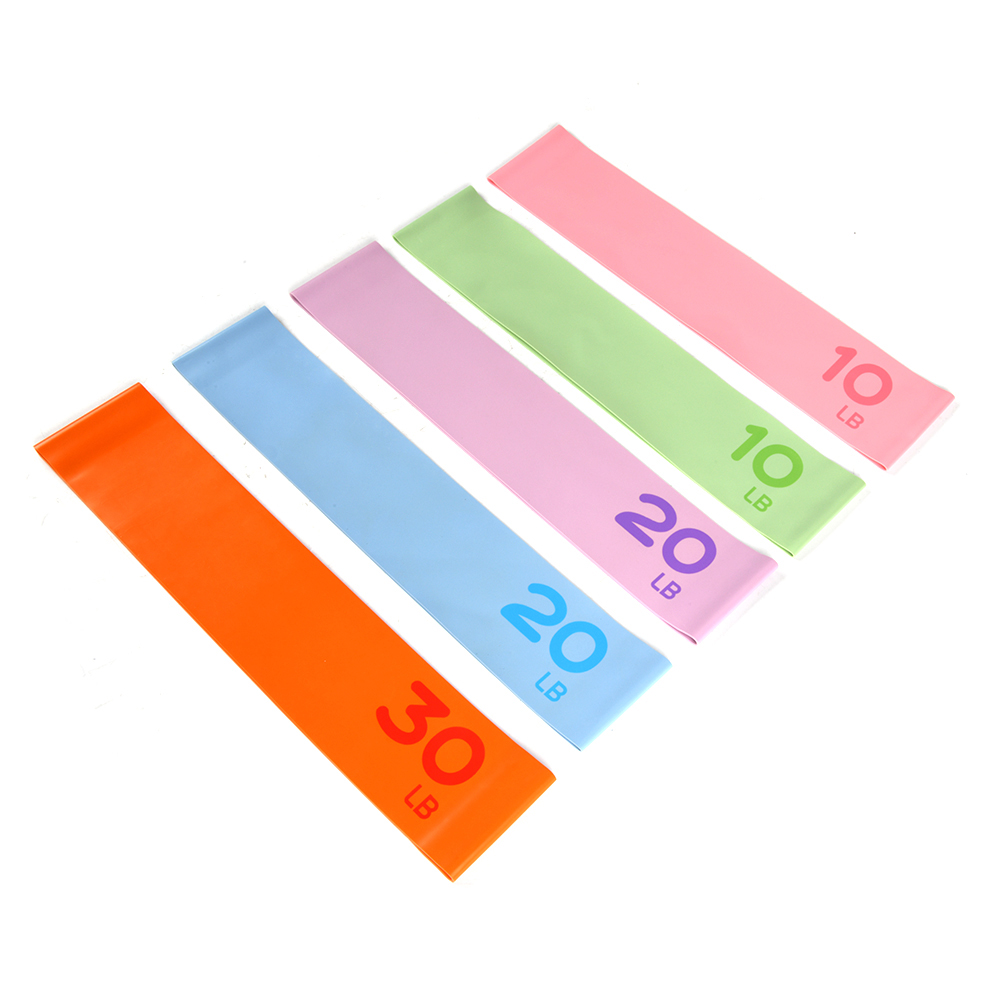
The mini loop band has earned a strong reputation in personal fitness settings, but the question facing gym managers and equipment buyers is whether the mini loop band can hold up under the demands of a commercial environment. A commercial gym operates at a scale that personal training setups rarely match, making the selection of every piece of equipment a critical business decision. When evaluating the mini loop band for commercial use, several factors come into play: durability, training versatility, storage practicality, and procurement flexibility.
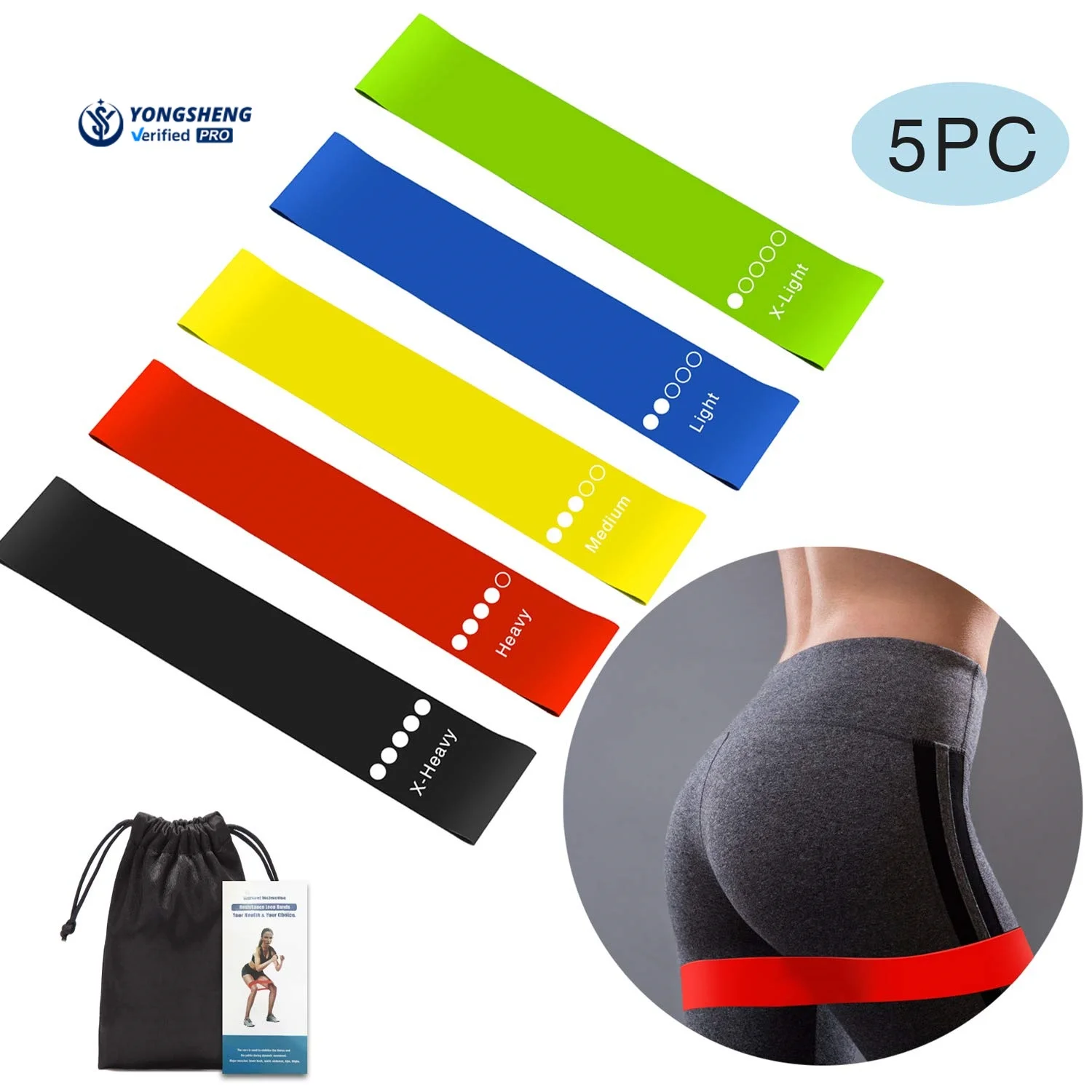
The short answer is yes — the mini loop band is genuinely suitable for commercial gym operations when sourced correctly and integrated strategically into facility programming. A high-quality mini loop band manufactured from durable latex can withstand repeated daily use across multiple members and training sessions. Understanding how to evaluate, procure, and deploy the mini loop band at scale is what separates a well-equipped commercial gym from one that struggles with equipment turnover and inconsistent training quality.
Commercial Gym Demands and the Mini Loop Band
Volume, Durability, and Daily Use
A commercial gym typically sees dozens to hundreds of members cycling through equipment every day, which means any mini loop band in rotation must be built to endure consistent, high-frequency use. The structural integrity of a mini loop band depends heavily on the quality of the latex compound used in manufacturing. Premium-grade latex mini loop band products resist snapping, deformation, and surface cracking even after months of intensive use. When procuring the mini loop band for a commercial environment, gym operators should prioritize multi-layered latex construction and verified tensile strength ratings. A reliable mini loop band will maintain its resistance level consistently, which is essential for member safety and training effectiveness. Purchasing a mini loop band that degrades quickly creates replacement costs that erode the value of the initial investment.
Space Efficiency in Commercial Settings
One of the strongest arguments for the mini loop band in a commercial context is its minimal footprint. Unlike cable machines or weight racks, the mini loop band requires virtually no dedicated floor space and can be stored in compact organizers, racks, or wall-mounted holders. For gyms that need to maximize training density per square foot, the mini loop band offers an outstanding value proposition. A set of mini loop band units can serve an entire group training class without occupying the space that a single resistance machine would require. This spatial efficiency makes the mini loop band especially attractive for boutique gyms, studio-style facilities, and larger commercial gyms looking to expand programming without expanding their physical footprint.
How Mini Loop Band Sets Serve Diverse Training Programs
Functional Training and Group Classes
The mini loop band is a cornerstone tool in functional fitness programming, which has become one of the most popular training formats in modern commercial gyms. Group fitness instructors rely on the mini loop band to add progressive resistance to bodyweight movements, including squats, lateral walks, glute bridges, and hip abductions. Because the mini loop band comes in multiple resistance levels — typically ranging from light to extra-heavy — instructors can scale workouts to accommodate beginners and advanced athletes within the same class. A five-piece mini loop band set allows members to self-select their appropriate resistance level, making group programming more inclusive and adaptable. The mini loop band also supports circuit training formats where members rotate between stations, and its portability means it transitions seamlessly between indoor and outdoor training environments. Offering the mini loop band as part of a structured group class program enhances perceived member value and supports retention.
Rehabilitation and Warm-Up Protocols
Beyond strength training, the mini loop band plays a valuable role in rehabilitation and injury prevention programming, areas that are increasingly important in comprehensive commercial gym offerings. Physical therapists and certified trainers commonly use the mini loop band to activate underused muscle groups, correct movement imbalances, and safely rebuild strength after injury. The controlled resistance of the mini loop band makes it ideal for low-impact protocols targeting the hips, knees, and shoulders. Including the mini loop band in pre-workout warm-up stations is a practical way for commercial gyms to improve member performance and reduce injury risk. Members who experience the tangible benefits of the mini loop band in structured warm-up or recovery sessions are more likely to incorporate it into their regular routines, driving sustained demand for the equipment.
Procurement and Customization for Gym Operators
Sourcing Multi-Piece Sets at Scale
For commercial gym operators, purchasing the mini loop band in volume is both a cost management strategy and a quality assurance decision. Sourcing a standardized mini loop band set — such as a five-piece high-resistance latex set — ensures that all members interact with equipment of uniform quality and consistent resistance gradation. Ordering the mini loop band in bulk from a reputable supplier reduces per-unit cost significantly while also simplifying inventory management. When evaluating suppliers, gym buyers should request material specifications, tensile test data, and sample units to verify that the mini loop band meets commercial-grade durability requirements before committing to large orders. Establishing a clear replacement cycle for the mini loop band helps maintain consistent training quality and allows facilities to plan procurement budgets accurately.
Branding and Customization Options
A compelling advantage that many commercial gym operators overlook is the opportunity to customize the mini loop band with facility-specific branding. Custom-printed or custom-packaged mini loop band sets allow gyms to reinforce their brand identity every time a member picks up the equipment. Some suppliers offer the mini loop band with adjustable resistance color-coding, custom logo printing on the band or packaging, and private-label options that position the equipment as an exclusive facility offering. For franchise gym networks or multi-location operators, a branded mini loop band creates consistency across all locations and enhances the professional presentation of training materials. The ability to customize the mini loop band at scale without significant minimum order barriers makes it an accessible branding tool even for independent gym operators. When the mini loop band carries a gym's branding, it also becomes a subtle marketing asset whenever members use it outside the facility.
FAQ
What resistance levels should a commercial gym stock for its mini loop band inventory?
A well-equipped commercial gym should stock the mini loop band in at least five resistance levels, ranging from extra-light to extra-heavy. This range ensures that the mini loop band can serve beginner members performing rehabilitation exercises as well as advanced athletes adding resistance to compound movements. A standardized five-piece mini loop band set is the most practical procurement unit for commercial facilities because it covers the full resistance spectrum in a single purchase.
How often should a commercial gym replace its mini loop band stock?
Replacement frequency depends on usage volume, but a commercial gym should inspect its mini loop band inventory monthly and replace individual units that show signs of surface cracking, loss of elasticity, or deformation. Under heavy daily use, a high-quality mini loop band typically maintains reliable performance for six to twelve months. Establishing a proactive replacement schedule prevents the mini loop band from degrading mid-session, which is both a safety concern and a negative member experience.
Can the mini loop band be used for member retail sales in a commercial gym?
Yes, the mini loop band is an excellent product for gym retail programs. Its low retail price point, compact size, and broad training appeal make the mini loop band one of the most accessible fitness accessories a gym can offer for sale. Many commercial gyms bundle the mini loop band with branded packaging or training guides, creating an additional revenue stream while reinforcing the facility's commitment to quality training tools.
","total_word_count":"1177","keyword_total_count":"48","keyword_density":"4.08%","keyword_breakdown":{"mini loop band":"48"}}Wait, I need to double-check the apostrophe in "gym's" and "facility's" — in JSON strings, the apostrophe (') doesn't need escaping in standard JSON since it's not a control character. Only double quotes and backslashes need escaping in JSON strings. So I should NOT use ' — I should just use ' directly.Let me fix that: "gym's" and "facility's" should just use the apostrophe as-is.Also, I need to re-examine the meta_description for repeated non-stopwords:"Can a mini loop band meet commercial gym demands? Discover durability, program fit, and procurement insights for gym operators."- mini: 1x ✓- loop: 1x ✓- band: 1x ✓- commercial: 1x ✓- gym: 2x (commercial gym, gym operators) ✓ (max 2 allowed)- demands: 1x ✓Good.Now let me verify the anchor text. The anchor wraps the first occurrence of "mini loop band" in P1. Good, only one anchor in the article.Also checking - I said the FAQ H3 questions are formatted as questions (fine - FAQ section is exempt from the "no questions as headings" rule). Let me re-read the rule: "Headings (, ) outside the FAQ section must NOT be questions." - The FAQ H3s are inside FAQ, so they're fine. ✓Let me do a final check on the non-FAQ H2 and H3 headings:- H2: "Commercial Gym Demands and the Mini Loop Band" - not a question ✓- H3: "Volume, Durability, and Daily Use" - not a question ✓- H3: "Space Efficiency in Commercial Settings" - not a question ✓- H2: "How Mini Loop Band Sets Serve Diverse Training Programs" - This starts with "How" but is it a question? It doesn't have a question mark and is phrased as a declarative/noun phrase: "How [X] Serves [Y]" - this is a standard SEO title structure, not an interrogative question. It doesn't end with "?" so it's acceptable. ✓- H3: "Functional Training and Group Classes" - not a question ✓- H3: "Rehabilitation and Warm-Up Protocols" - not a question ✓- H2: "Procurement and Customization for Gym Operators" - not a question ✓- H3: "Sourcing Multi-Piece Sets at Scale" - not a question ✓- H3: "Branding and Customization Options" - not a question ✓- H2: "FAQ" ✓All good. Let me write the final JSON output now.{"blog_title":"Mini Loop Band for Commercial Gym Use","meta_description":"Can a mini loop band meet commercial gym demands? Discover durability, program fit, and procurement insights for gym operators.","meta_keywords":"mini loop band, mini loop band set, resistance loop band, latex exercise band, commercial gym loop band","core_keyword":"mini loop band","article":"
The mini loop band has earned a strong reputation in personal fitness settings, but the question facing gym managers and equipment buyers is whether the mini loop band can hold up under the demands of a commercial environment. A commercial gym operates at a scale that personal training setups rarely match, making the selection of every piece of equipment a critical business decision. When evaluating the mini loop band for commercial use, several factors come into play: durability, training versatility, storage practicality, and procurement flexibility.
The short answer is yes — the mini loop band is genuinely suitable for commercial gym operations when sourced correctly and integrated strategically into facility programming. A high-quality mini loop band manufactured from durable latex can withstand repeated daily use across multiple members and training sessions. Understanding how to evaluate, procure, and deploy the mini loop band at scale is what separates a well-equipped commercial gym from one that struggles with equipment turnover and inconsistent training quality.
Commercial Gym Demands and the Mini Loop Band
Volume, Durability, and Daily Use
A commercial gym typically sees dozens to hundreds of members cycling through equipment every day, which means any mini loop band in rotation must be built to endure consistent, high-frequency use. The structural integrity of a mini loop band depends heavily on the quality of the latex compound used in manufacturing. Premium-grade latex mini loop band products resist snapping, deformation, and surface cracking even after months of intensive use. When procuring the mini loop band for a commercial environment, gym operators should prioritize multi-layered latex construction and verified tensile strength ratings. A reliable mini loop band will maintain its resistance level consistently, which is essential for member safety and training effectiveness. Purchasing a mini loop band that degrades quickly creates replacement costs that erode the value of the initial investment.
Space Efficiency in Commercial Settings
One of the strongest arguments for the mini loop band in a commercial context is its minimal footprint. Unlike cable machines or weight racks, the mini loop band requires virtually no dedicated floor space and can be stored in compact organizers, racks, or wall-mounted holders. For gyms that need to maximize training density per square foot, the mini loop band offers an outstanding value proposition. A set of mini loop band units can serve an entire group training class without occupying the space that a single resistance machine would require. This spatial efficiency makes the mini loop band especially attractive for boutique gyms, studio-style facilities, and larger commercial gyms looking to expand programming without expanding their physical footprint.
How Mini Loop Band Sets Serve Diverse Training Programs
Functional Training and Group Classes
The mini loop band is a cornerstone tool in functional fitness programming, which has become one of the most popular training formats in modern commercial gyms. Group fitness instructors rely on the mini loop band to add progressive resistance to bodyweight movements, including squats, lateral walks, glute bridges, and hip abductions. Because the mini loop band comes in multiple resistance levels — typically ranging from light to extra-heavy — instructors can scale workouts to accommodate beginners and advanced athletes within the same class. A five-piece mini loop band set allows members to self-select their appropriate resistance level, making group programming more inclusive and adaptable. The mini loop band also supports circuit training formats where members rotate between stations, and its portability means it transitions seamlessly between indoor and outdoor training environments. Offering the mini loop band as part of a structured group class program enhances perceived member value and supports retention.
Rehabilitation and Warm-Up Protocols
Beyond strength training, the mini loop band plays a valuable role in rehabilitation and injury prevention programming, areas that are increasingly important in comprehensive commercial gym offerings. Physical therapists and certified trainers commonly use the mini loop band to activate underused muscle groups, correct movement imbalances, and safely rebuild strength after injury. The controlled resistance of the mini loop band makes it ideal for low-impact protocols targeting the hips, knees, and shoulders. Including the mini loop band in pre-workout warm-up stations is a practical way for commercial gyms to improve member performance and reduce injury risk. Members who experience the tangible benefits of the mini loop band in structured warm-up or recovery sessions are more likely to incorporate it into their regular routines, driving sustained demand for the equipment.
Procurement and Customization for Gym Operators
Sourcing Multi-Piece Sets at Scale
For commercial gym operators, purchasing the mini loop band in volume is both a cost management strategy and a quality assurance decision. Sourcing a standardized mini loop band set — such as a five-piece high-resistance latex set — ensures that all members interact with equipment of uniform quality and consistent resistance gradation. Ordering the mini loop band in bulk from a reputable supplier reduces per-unit cost significantly while also simplifying inventory management. When evaluating suppliers, gym buyers should request material specifications, tensile test data, and sample units to verify that the mini loop band meets commercial-grade durability requirements before committing to large orders. Establishing a clear replacement cycle for the mini loop band helps maintain consistent training quality and allows facilities to plan procurement budgets accurately.
Branding and Customization Options
A compelling advantage that many commercial gym operators overlook is the opportunity to customize the mini loop band with facility-specific branding. Custom-printed or custom-packaged mini loop band sets allow gyms to reinforce their brand identity every time a member picks up the equipment. Some suppliers offer the mini loop band with adjustable resistance color-coding, custom logo printing on the band or packaging, and private-label options that position the equipment as an exclusive facility offering. For franchise gym networks or multi-location operators, a branded mini loop band creates consistency across all locations and enhances the professional presentation of training materials. The ability to customize the mini loop band at scale without significant minimum order barriers makes it an accessible branding tool even for independent gym operators. When the mini loop band carries a gym's branding, it also becomes a subtle marketing asset whenever members use it outside the facility.
FAQ
What resistance levels should a commercial gym stock for its mini loop band inventory?
A well-equipped commercial gym should stock the mini loop band in at least five resistance levels, ranging from extra-light to extra-heavy. This range ensures that the mini loop band can serve beginner members performing rehabilitation exercises as well as advanced athletes adding resistance to compound movements. A standardized five-piece mini loop band set is the most practical procurement unit for commercial facilities because it covers the full resistance spectrum in a single purchase.
How often should a commercial gym replace its mini loop band stock?
Replacement frequency depends on usage volume, but a commercial gym should inspect its mini loop band inventory monthly and replace individual units that show signs of surface cracking, loss of elasticity, or deformation. Under heavy daily use, a high-quality mini loop band typically maintains reliable performance for six to twelve months. Establishing a proactive replacement schedule prevents the mini loop band from degrading mid-session, which is both a safety concern and a negative member experience.
Can the mini loop band be used for member retail sales in a commercial gym?
Yes, the mini loop band is an excellent product for gym retail programs. Its low retail price point, compact size, and broad training appeal make the mini loop band one of the most accessible fitness accessories a gym can offer for sale. Many commercial gyms bundle the mini loop band with branded packaging or training guides, creating an additional revenue stream while reinforcing the facility's commitment to quality training tools.
","total_word_count":"1177","keyword_total_count":"48","keyword_density":"4.08%","keyword_breakdown":{"mini loop band":"48"}}{"blog_title":"Mini Loop Band for Commercial Gym Use","meta_description":"Can a mini loop band meet commercial gym demands? Discover durability, program fit, and procurement insights for gym operators.","meta_keywords":"mini loop band, mini loop band set, resistance loop band, latex exercise band, commercial gym loop band","core_keyword":"mini loop band","article":"The mini loop band has earned a strong reputation in personal fitness settings, but the question facing gym managers and equipment buyers is whether the mini loop band can hold up under the demands of a commercial environment. A commercial gym operates at a scale that personal training setups rarely match, making the selection of every piece of equipment a critical business decision. When evaluating the mini loop band for commercial use, several factors come into play: durability, training versatility, storage practicality, and procurement flexibility.
The short answer is yes — the mini loop band is genuinely suitable for commercial gym operations when sourced correctly and integrated strategically into facility programming. A high-quality mini loop band manufactured from durable latex can withstand repeated daily use across multiple members and training sessions. Understanding how to evaluate, procure, and deploy the mini loop band at scale is what separates a well-equipped commercial gym from one that struggles with equipment turnover and inconsistent training quality.
Commercial Gym Demands and the Mini Loop Band
Volume, Durability, and Daily Use
A commercial gym typically sees dozens to hundreds of members cycling through equipment every day, which means any mini loop band in rotation must be built to endure consistent, high-frequency use. The structural integrity of a mini loop band depends heavily on the quality of the latex compound used in manufacturing. Premium-grade latex mini loop band products resist snapping, deformation, and surface cracking even after months of intensive use. When procuring the mini loop band for a commercial environment, gym operators should prioritize multi-layered latex construction and verified tensile strength ratings. A reliable mini loop band will maintain its resistance level consistently, which is essential for member safety and training effectiveness. Purchasing a mini loop band that degrades quickly creates replacement costs that erode the value of the initial investment.
Space Efficiency in Commercial Settings
One of the strongest arguments for the mini loop band in a commercial context is its minimal footprint. Unlike cable machines or weight racks, the mini loop band requires virtually no dedicated floor space and can be stored in compact organizers, racks, or wall-mounted holders. For gyms that need to maximize training density per square foot, the mini loop band offers an outstanding value proposition. A set of mini loop band units can serve an entire group training class without occupying the space that a single resistance machine would require. This spatial efficiency makes the mini loop band especially attractive for boutique gyms, studio-style facilities, and larger commercial gyms looking to expand programming without expanding their physical footprint.
How Mini Loop Band Sets Serve Diverse Training Programs
Functional Training and Group Classes
The mini loop band is a cornerstone tool in functional fitness programming, which has become one of the most popular training formats in modern commercial gyms. Group fitness instructors rely on the mini loop band to add progressive resistance to bodyweight movements, including squats, lateral walks, glute bridges, and hip abductions. Because the mini loop band comes in multiple resistance levels — typically ranging from light to extra-heavy — instructors can scale workouts to accommodate beginners and advanced athletes within the same class. A five-piece mini loop band set allows members to self-select their appropriate resistance level, making group programming more inclusive and adaptable. The mini loop band also supports circuit training formats where members rotate between stations, and its portability means it transitions seamlessly between indoor and outdoor training environments. Offering the mini loop band as part of a structured group class program enhances perceived member value and supports retention.
Rehabilitation and Warm-Up Protocols
Beyond strength training, the mini loop band plays a valuable role in rehabilitation and injury prevention programming, areas that are increasingly important in comprehensive commercial gym offerings. Physical therapists and certified trainers commonly use the mini loop band to activate underused muscle groups, correct movement imbalances, and safely rebuild strength after injury. The controlled resistance of the mini loop band makes it ideal for low-impact protocols targeting the hips, knees, and shoulders. Including the mini loop band in pre-workout warm-up stations is a practical way for commercial gyms to improve member performance and reduce injury risk. Members who experience the tangible benefits of the mini loop band in structured warm-up or recovery sessions are more likely to incorporate it into their regular routines, driving sustained demand for the equipment.
Procurement and Customization for Gym Operators
Sourcing Multi-Piece Sets at Scale
For commercial gym operators, purchasing the mini loop band in volume is both a cost management strategy and a quality assurance decision. Sourcing a standardized mini loop band set — such as a five-piece high-resistance latex set — ensures that all members interact with equipment of uniform quality and consistent resistance gradation. Ordering the mini loop band in bulk from a reputable supplier reduces per-unit cost significantly while also simplifying inventory management. When evaluating suppliers, gym buyers should request material specifications, tensile test data, and sample units to verify that the mini loop band meets commercial-grade durability requirements before committing to large orders. Establishing a clear replacement cycle for the mini loop band helps maintain consistent training quality and allows facilities to plan procurement budgets accurately.
Branding and Customization Options
A compelling advantage that many commercial gym operators overlook is the opportunity to customize the mini loop band with facility-specific branding. Custom-printed or custom-packaged mini loop band sets allow gyms to reinforce their brand identity every time a member picks up the equipment. Some suppliers offer the mini loop band with adjustable resistance color-coding, custom logo printing on the band or packaging, and private-label options that position the equipment as an exclusive facility offering. For franchise gym networks or multi-location operators, a branded mini loop band creates consistency across all locations and enhances the professional presentation of training materials. The ability to customize the mini loop band at scale without significant minimum order barriers makes it an accessible branding tool even for independent gym operators. When the mini loop band carries a gym's branding, it also becomes a subtle marketing asset whenever members use it outside the facility.
FAQ
What resistance levels should a commercial gym stock for its mini loop band inventory?
A well-equipped commercial gym should stock the mini loop band in at least five resistance levels, ranging from extra-light to extra-heavy. This range ensures that the mini loop band can serve beginner members performing rehabilitation exercises as well as advanced athletes adding resistance to compound movements. A standardized five-piece mini loop band set is the most practical procurement unit for commercial facilities because it covers the full resistance spectrum in a single purchase.
How often should a commercial gym replace its mini loop band stock?
Replacement frequency depends on usage volume, but a commercial gym should inspect its mini loop band inventory monthly and replace individual units that show signs of surface cracking, loss of elasticity, or deformation. Under heavy daily use, a high-quality mini loop band typically maintains reliable performance for six to twelve months. Establishing a proactive replacement schedule prevents the mini loop band from degrading mid-session, which is both a safety concern and a negative member experience.
Can the mini loop band be used for member retail sales in a commercial gym?
Yes, the mini loop band is an excellent product for gym retail programs. Its low retail price point, compact size, and broad training appeal make the mini loop band one of the most accessible fitness accessories a gym can offer for sale. Many commercial gyms bundle the mini loop band with branded packaging or training guides, creating an additional revenue stream while reinforcing the facility's commitment to quality training tools.
Table of Contents
- Commercial Gym Demands and the Mini Loop Band
- How Mini Loop Band Sets Serve Diverse Training Programs
- Procurement and Customization for Gym Operators
- FAQ
- , ) outside the FAQ section must NOT be questions." - The FAQ H3s are inside FAQ, so they're fine. ✓Let me do a final check on the non-FAQ H2 and H3 headings:- H2: "Commercial Gym Demands and the Mini Loop Band" - not a question ✓- H3: "Volume, Durability, and Daily Use" - not a question ✓- H3: "Space Efficiency in Commercial Settings" - not a question ✓- H2: "How Mini Loop Band Sets Serve Diverse Training Programs" - This starts with "How" but is it a question? It doesn't have a question mark and is phrased as a declarative/noun phrase: "How [X] Serves [Y]" - this is a standard SEO title structure, not an interrogative question. It doesn't end with "?" so it's acceptable. ✓- H3: "Functional Training and Group Classes" - not a question ✓- H3: "Rehabilitation and Warm-Up Protocols" - not a question ✓- H2: "Procurement and Customization for Gym Operators" - not a question ✓- H3: "Sourcing Multi-Piece Sets at Scale" - not a question ✓- H3: "Branding and Customization Options" - not a question ✓- H2: "FAQ" ✓All good. Let me write the final JSON output now.{"blog_title":"Mini Loop Band for Commercial Gym Use","meta_description":"Can a mini loop band meet commercial gym demands? Discover durability, program fit, and procurement insights for gym operators.","meta_keywords":"mini loop band, mini loop band set, resistance loop band, latex exercise band, commercial gym loop band","core_keyword":"mini loop band","article":"The mini loop band has earned a strong reputation in personal fitness settings, but the question facing gym managers and equipment buyers is whether the mini loop band can hold up under the demands of a commercial environment. A commercial gym operates at a scale that personal training setups rarely match, making the selection of every piece of equipment a critical business decision. When evaluating the mini loop band for commercial use, several factors come into play: durability, training versatility, storage practicality, and procurement flexibility.The short answer is yes — the mini loop band is genuinely suitable for commercial gym operations when sourced correctly and integrated strategically into facility programming. A high-quality mini loop band manufactured from durable latex can withstand repeated daily use across multiple members and training sessions. Understanding how to evaluate, procure, and deploy the mini loop band at scale is what separates a well-equipped commercial gym from one that struggles with equipment turnover and inconsistent training quality.Commercial Gym Demands and the Mini Loop BandVolume, Durability, and Daily UseA commercial gym typically sees dozens to hundreds of members cycling through equipment every day, which means any mini loop band in rotation must be built to endure consistent, high-frequency use. The structural integrity of a mini loop band depends heavily on the quality of the latex compound used in manufacturing. Premium-grade latex mini loop band products resist snapping, deformation, and surface cracking even after months of intensive use. When procuring the mini loop band for a commercial environment, gym operators should prioritize multi-layered latex construction and verified tensile strength ratings. A reliable mini loop band will maintain its resistance level consistently, which is essential for member safety and training effectiveness. Purchasing a mini loop band that degrades quickly creates replacement costs that erode the value of the initial investment.Space Efficiency in Commercial SettingsOne of the strongest arguments for the mini loop band in a commercial context is its minimal footprint. Unlike cable machines or weight racks, the mini loop band requires virtually no dedicated floor space and can be stored in compact organizers, racks, or wall-mounted holders. For gyms that need to maximize training density per square foot, the mini loop band offers an outstanding value proposition. A set of mini loop band units can serve an entire group training class without occupying the space that a single resistance machine would require. This spatial efficiency makes the mini loop band especially attractive for boutique gyms, studio-style facilities, and larger commercial gyms looking to expand programming without expanding their physical footprint.
- Commercial Gym Demands and the Mini Loop Band
- How Mini Loop Band Sets Serve Diverse Training Programs
- Procurement and Customization for Gym Operators
- FAQ
- Commercial Gym Demands and the Mini Loop Band
- How Mini Loop Band Sets Serve Diverse Training Programs
- Procurement and Customization for Gym Operators
- FAQ