 EN
EN


The yoga ball has become one of the most recognized fitness tools in both home gyms and professional training studios. Its versatility and low barrier to entry make it attractive to a wide range of users, from seasoned athletes to those who are just starting their fitness journey. But a common question persists: is yoga ball exercise genuinely suitable for beginners and seniors, or does it demand a level of coordination and strength that makes it better suited to experienced users?
The short answer is yes — a yoga ball is highly appropriate for beginners and seniors when used with proper guidance and realistic expectations. A yoga ball is designed to challenge stability gently, encourage core engagement, and support low-impact movement, all of which align well with what new exercisers and older adults need most. This article explains the conditions, considerations, and practical steps that make yoga ball exercise a smart, safe, and beneficial choice for these two important groups.
Why a Yoga Ball Works for Beginners
Low-Impact Entry into Core Training
A yoga ball introduces core engagement without the jarring impact of floor-based exercises or heavy equipment. When a beginner sits or lies on a yoga ball, the body naturally activates stabilizing muscles to maintain balance. This process happens gradually and intuitively, making a yoga ball an excellent first tool for building foundational strength. Unlike machines that isolate a single muscle, a yoga ball recruits multiple muscle groups simultaneously, giving beginners a more functional and complete workout experience.
For someone who has never exercised regularly, starting with a yoga ball feels approachable rather than intimidating. The yoga ball allows users to begin with gentle seated movements, progress to supported stretches, and eventually attempt more challenging positions as their confidence grows. This natural progression path is one reason fitness instructors consistently recommend a yoga ball as a starting point for new clients.
Building Confidence Through Stability Training
One of the key concerns for beginners is the fear of injury or failure. A yoga ball reduces that risk by offering a forgiving, cushioned surface that adapts to movement rather than resisting it. When a beginner uses a yoga ball for exercises like seated balance holds or wall squats, the yoga ball provides gentle feedback on body alignment without creating excessive strain. Over time, this builds neuromuscular coordination and physical confidence in equal measure.
Beginners also benefit psychologically from the yoga ball's accessibility. Because a yoga ball does not look like intimidating gym equipment, it lowers mental resistance to exercise. Many beginners report that working out with a yoga ball feels more like active play than a workout, which supports long-term consistency — one of the biggest challenges in any fitness program.
Why Seniors Benefit from Yoga Ball Exercise
Improving Balance and Fall Prevention
Balance deteriorates with age, and this decline is one of the primary risk factors for falls among seniors. A yoga ball offers a practical and effective way to address this issue. When a senior performs yoga ball exercises such as seated weight shifts, gentle hip circles, or supported back extensions, the yoga ball activates the postural muscles that support upright balance. Regular yoga ball use strengthens these stabilizers progressively, contributing to improved balance in everyday activities.
Physical therapists frequently incorporate a yoga ball into rehabilitation and senior fitness programs because of this balance-training benefit. The unstable surface of a yoga ball creates small, manageable challenges that train the body's balance system without exposing seniors to high-risk movements. When a senior exercises with a yoga ball consistently, the improvements in stability often translate directly into greater confidence during walking, stair-climbing, and other daily tasks.
Joint-Friendly Movement for Older Adults
Seniors often deal with joint stiffness, arthritis, or reduced flexibility that makes traditional exercise painful or impractical. A yoga ball is exceptionally joint-friendly because it distributes body weight across a curved surface rather than a flat, rigid one. This means that exercises performed on a yoga ball place far less compressive stress on the knees, hips, and spine than comparable floor exercises would. For seniors managing chronic joint conditions, this makes a yoga ball one of the most comfortable and sustainable exercise options available.
Seated yoga ball exercises are particularly valuable for seniors with limited mobility. A yoga ball can even serve as an active sitting surface during the day, encouraging gentle core and postural engagement without requiring a formal workout. This passive benefit makes a yoga ball a uniquely practical tool for older adults who may not have the endurance for longer exercise sessions.
Practical Guidelines for Safe Yoga Ball Use
Choosing the Right Size and Firmness
Using the correct yoga ball size is essential for both safety and effectiveness. A yoga ball that is too large or too small will compromise posture and increase the risk of injury. As a general guide, when sitting on a yoga ball, the hips should be at or slightly above knee level, with feet flat on the floor. Most adults in the average height range find a yoga ball in the 55 cm to 65 cm diameter range to be the best fit. Taller individuals or seniors who prefer a slightly higher seat should consider a yoga ball in the 75 cm range.
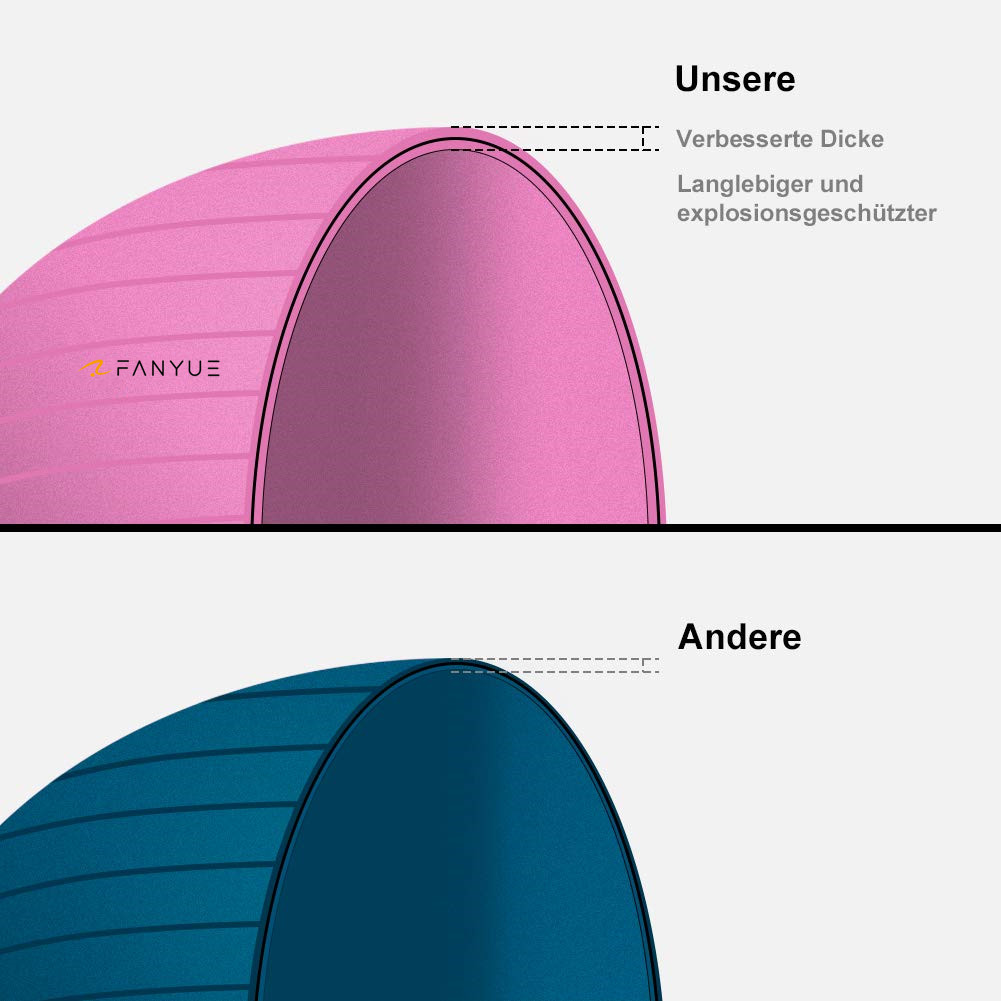
Firmness also matters. A yoga ball that is overinflated is harder to balance on and increases instability. A yoga ball that is underinflated may not provide adequate resistance. For beginners and seniors, a slightly softer yoga ball provides more surface contact and greater stability, making the exercise experience safer and more controlled from the start.
Starting Slow and Progressing Gradually
Both beginners and seniors should start with the most basic yoga ball exercises before attempting dynamic or advanced movements. Seated balance holds, gentle pelvic tilts, and supported wall squats are excellent starting points. Each of these yoga ball exercises builds the neuromuscular foundation needed for more complex movements later. A structured yoga ball routine that begins with these fundamentals and adds new challenges over several weeks is far more effective and far safer than jumping into intermediate-level exercises immediately.
Supervision or guided instruction adds another layer of safety when starting a yoga ball program. Many fitness centers and physical therapy clinics offer yoga ball classes specifically designed for beginners and seniors. Taking even a few guided sessions can significantly improve technique and prevent the common errors — such as overextending the back or losing foot contact with the floor — that cause avoidable yoga ball injuries.
FAQ
Can seniors use a yoga ball without supervision?
Many seniors can use a yoga ball safely on their own once they have learned the basic techniques. However, it is strongly recommended to complete at least a few supervised sessions before exercising independently. This helps establish correct form and prevents the risk of falling off the yoga ball, which is the most common beginner injury.
What size yoga ball is best for beginners?
For most beginners, a yoga ball in the 55 cm to 65 cm diameter range is the most suitable choice. The correct size ensures that the hips remain level with or slightly above the knees when sitting, which supports good spinal alignment and reduces strain during yoga ball exercises.
How often should beginners use a yoga ball?
Beginners can benefit from yoga ball exercise two to three times per week, allowing rest days between sessions to support muscle recovery. Starting with sessions of 15 to 20 minutes and gradually extending to 30 minutes or more as fitness improves is a practical and evidence-supported approach to yoga ball training.