 EN
EN


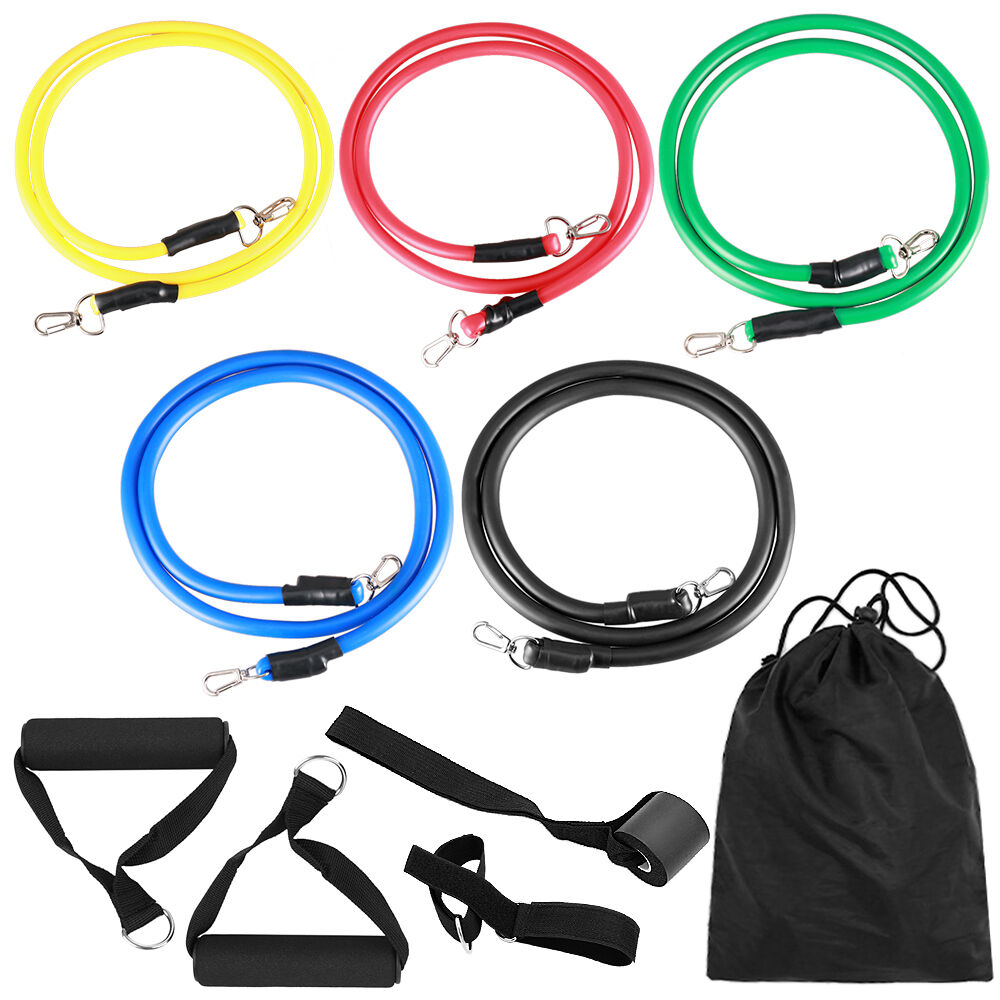
Walk into almost any fitness studio today and you will likely spot a rack of colorful, elastic bands hanging near the free weights or stretched across a dedicated functional training zone. The resistance tube has quietly moved from a rehabilitation accessory into a central piece of equipment that coaches, personal trainers, and group fitness instructors rely on every single day. This shift did not happen overnight, and understanding it requires looking at what modern studios actually need from their equipment investments.
The resistance tube offers something that rigid, heavy machinery simply cannot: adaptability. Studios operating in compact urban spaces, budget-conscious boutique gyms, and large commercial facilities alike have all discovered that this deceptively simple tool can replace or supplement a wide variety of fixed-resistance machines. As fitness programming evolves toward functional movement, injury prevention, and client retention, the resistance tube keeps proving that its value goes far beyond convenience. This article examines the key reasons why studios are standardizing on it and what that means for how training environments are being designed today.
The Functional Training Revolution and the Resistance Tube
How Functional Movement Created Demand for Versatile Tools
Over the past decade, the fitness industry pivoted hard toward functional training — movement patterns that replicate real-life mechanics rather than isolating single muscle groups on a fixed machine. Squats, hinges, presses, pulls, and rotational movements became the foundation of programming for clients ranging from elite athletes to older adults managing mobility challenges. This philosophical shift created a direct problem for studio owners: traditional machines were designed for linear, isolated movement and could not easily support multi-plane, dynamic exercises.
The resistance tube filled this gap with remarkable precision. Because it creates tension through elastic elongation rather than gravity-dependent weight stacks, a trainer can position it at almost any angle, attach it to anchors at floor, waist, or overhead height, and guide clients through movement arcs that machines simply cannot replicate. The resistance tube naturally accommodates the body's movement rather than constraining it to a predetermined path, which aligns directly with what functional training demands.
Studios that adopted functional training methodologies found that a full set of resistance tubes could accomplish what an entire row of cable machines once did, at a fraction of the cost and in a fraction of the floor space. This practical advantage accelerated adoption across studio types and programming styles.
Progressive Resistance and Stackable Load Options
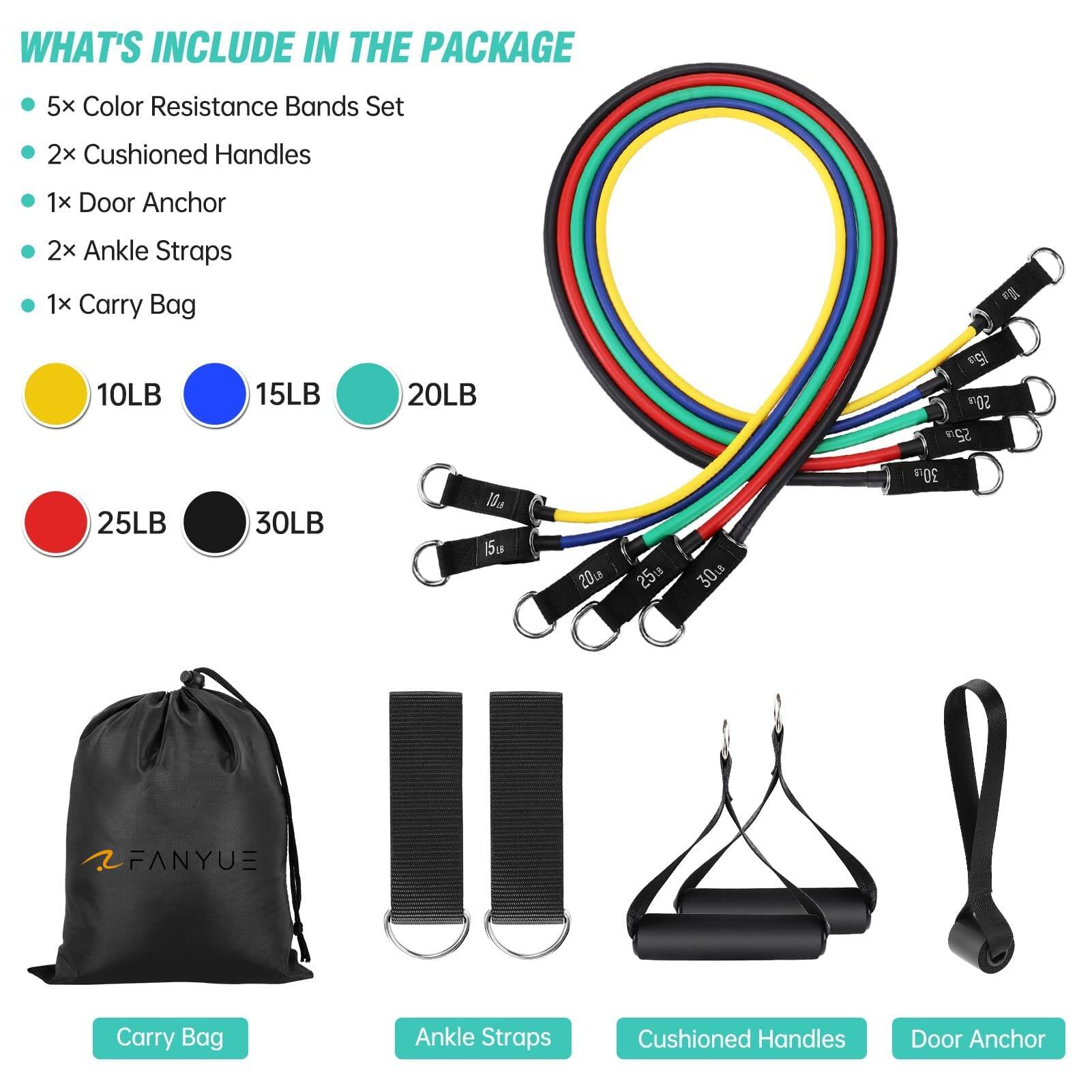
One of the most important practical features that made the resistance tube a studio standard is the ability to stack resistance levels. A quality stackable resistance tube set allows trainers to combine multiple tubes onto a single handle system, incrementally increasing load without switching equipment entirely. This matters enormously in a live training session where transitions need to be fast and smooth.
A set that reaches up to 150 lbs of combined resistance, for example, gives trainers access to a loading range that serves beginners doing light activation work and advanced clients pushing through heavy compound movements — all within the same equipment system. The resistance tube therefore removes the need to stock dozens of individual dumbbells or weight plates for exercises that can be performed elastically with equal or greater training effect.
Progressive overload, a cornerstone principle of strength and conditioning, becomes straightforward to apply when trainers can simply add a tube to increase resistance. Studios appreciate this because it simplifies program design, reduces equipment handling time during sessions, and allows large group classes to self-select their load with minimal instructor intervention.
Space Efficiency and Studio Economics
Why Studio Owners Prioritize the Resistance Tube in Equipment Budgets
Real estate costs in commercial fitness are punishing. Every square meter of studio floor space carries a financial cost, and studio owners must extract maximum programming value from every piece of equipment they purchase. A resistance tube set occupies almost no floor space when stored, requires no electrical connection, and needs no maintenance beyond periodic inspection — factors that translate directly into lower operating costs compared to cable machines or selectorized equipment.
From a capital expenditure perspective, outfitting an entire small-group training studio with resistance tubes is dramatically less expensive than purchasing an equivalent number of cable units. The savings allow studio owners to reinvest in coaching talent, programming development, or marketing rather than servicing debt on heavy equipment. This economic reality has made the resistance tube a default choice when studios are scaling up or launching new locations.
Portability also plays a role in the economics. A studio that runs outdoor sessions, pop-up classes, or corporate wellness programs at client sites can bring resistance tubes without logistical complexity. The equipment travels in a small bag and sets up in seconds, extending the studio's revenue-generating capacity beyond its four walls without additional investment.
Maximizing Training Density in Group Class Formats
Group fitness classes depend on smooth flow, minimal transitions, and the ability to serve clients across a wide fitness spectrum simultaneously. The resistance tube supports all three of these requirements. Because each client can hold their own tube and adjust resistance without instructor help, large classes can maintain high energy and momentum without constant equipment redistribution or setup delays.
Circuit-style programming, which is a dominant format in boutique studios, becomes especially effective when every station involves a resistance tube. Clients rotate with their personal set of tubes, keeping load selection in their control while the instructor maintains the class pace and focuses on cueing form and intensity. This dynamic improves the overall experience for clients and reduces the physical demands on instructors who would otherwise be repositioning heavy equipment between rounds.
Studios that have standardized on resistance tubes for their group formats consistently report that class capacity can increase without sacrificing the quality of individual coaching, because the equipment itself empowers client autonomy in a way that fixed machines do not.
Injury Prevention and Rehabilitation Applications
The Resistance Tube in Prehabilitation Programming
Modern fitness studios are increasingly expected to serve clients who carry injury history, manage chronic pain, or are working under the guidance of physical therapists alongside their personal trainers. This reality has pushed studios to incorporate tools that bridge the gap between clinical rehabilitation and performance training. The resistance tube has historically been the preferred tool in rehabilitation settings precisely because elastic resistance generates a force curve that is gentler on joints at the beginning of a movement and progressively increases as the muscle approaches its strongest position.
This accommodating resistance profile makes the resistance tube ideal for prehabilitation work — the proactive strengthening of vulnerable joints, stabilizer muscles, and connective tissue before injury occurs. Shoulder external rotation, hip abductor activation, and scapular stabilization exercises performed with a resistance tube are now standard inclusions in warm-up protocols across sports performance facilities and general fitness studios alike.
Trainers who understand this application can offer a more complete and differentiated service to their clients, particularly those in older demographics or those returning from injury. The resistance tube enables this without requiring clinical equipment or specialized rehabilitation infrastructure inside the studio.
Supporting Mobility and Activation Work Across Client Populations
Beyond formal rehabilitation, the resistance tube serves a critical role in mobility preparation and muscle activation routines that precede heavier loading phases in a session. Hip flexor activation, thoracic rotation drills, and ankle stability work all respond well to light elastic resistance that encourages proprioception and neuromuscular engagement without taxing the system before the main training block begins.
For older clients or those with limited training age, these activation routines may represent the bulk of their session. For advanced athletes, the same resistance tube used for warm-up activation might be incorporated into accessory work targeting specific weaknesses identified in their programming. This versatility across client types is a defining reason why the resistance tube has achieved standard-tool status rather than remaining a niche rehabilitation accessory.
Studios serving diverse populations — which is virtually all studios — find that very few tools can credibly serve a 65-year-old post-surgical client and a 25-year-old competitive athlete within the same class or back-to-back sessions. The resistance tube is one of those rare tools that genuinely bridges that gap.
Programming Flexibility and Trainer Adoption
Why Certified Trainers Prefer the Resistance Tube in Session Design
From a trainer's perspective, the resistance tube is one of the most programming-flexible tools available. It can replicate cable exercises, add accommodating resistance to bodyweight movements, serve as an assistance tool for pull-up progressions, and function as a mobility aid in stretching sequences. This means a trainer can build an entire session — warm-up, strength, conditioning, and cool-down — around a single resistance tube set without ever switching equipment categories.
This simplicity in session architecture reduces the cognitive load on trainers during live coaching, allowing them to focus attention on client form, motivation, and adaptation rather than equipment logistics. For studios managing large trainer rosters with varying experience levels, standardizing on a common tool like the resistance tube also makes program sharing and session documentation more consistent across the team.
Continuing education and certification bodies have also embraced elastic resistance training as a core competency in their curricula, which means newly certified trainers arrive in studios already familiar with resistance tube applications. This reduces the onboarding barrier and allows studios to implement tube-based programming immediately upon hiring new staff.
Client Engagement and Perceived Value
Client retention in fitness studios hinges on perceived progress, session variety, and the feeling of receiving personalized attention. The resistance tube supports all three. Clients can visibly track their progression from lighter to heavier tubes over weeks or months, providing a tangible marker of improvement that motivates continued attendance. The variety of exercises achievable with elastic resistance means sessions feel fresh rather than repetitive, even when programming follows a consistent structure.
Clients also associate the resistance tube with professional, thoughtful programming rather than generic gym-floor activity. When a trainer deliberately selects a resistance tube to address a specific movement deficit or challenge a particular muscle group, clients recognize and appreciate that level of detail. This perception of individualized care, even in a group setting, is a key driver of the membership loyalty that sustains studio businesses.
Studios that have built their brand identity around functional, science-backed training find that featuring the resistance tube prominently in their marketing and class descriptions resonates strongly with health-conscious consumers who research their fitness options carefully before committing to a membership.
FAQ
What makes a resistance tube different from a flat resistance band?
A resistance tube is a tubular elastic cord, typically made from natural latex, with handles attached at each end. This design allows it to be used with a wide variety of grip positions and anchor configurations that flat bands cannot easily support. The handle system also enables stackable setups where multiple tubes share a single handle, giving trainers and clients a much broader load range within one compact equipment system. Flat bands are better suited for wrapping around limbs or anchoring without handles, while the resistance tube excels in cable-replacement and handle-grip exercises.
How many resistance tubes does a studio need to equip a group class?
For a group class setting, each participant typically needs one complete set of resistance tubes that spans a useful range of resistance levels — commonly from very light to heavy within a stackable system. The exact number of sets a studio purchases depends on class capacity and whether sessions are run simultaneously. Most studios find that equipping each spot in their largest class, plus a small reserve of 10 to 15 percent for replacements, gives them the flexibility they need without over-investing in inventory.
How long does a resistance tube last under regular studio use?
The lifespan of a resistance tube under regular commercial use depends heavily on the quality of the latex, how the equipment is stored, and how frequently it is used. High-quality natural latex tubes stored away from direct sunlight, heat, and sharp edges can last one to two years of consistent daily use in a studio environment. Studios should establish a routine inspection protocol to check for micro-tears, surface cracking, or handle connection wear, replacing tubes proactively before failure occurs during a session.
Can a resistance tube replace free weights for strength training in a studio?
For most general fitness and functional training purposes, a resistance tube can replicate or supplement the stimulus provided by free weights across a broad range of exercises. The elastic resistance curve differs from the constant gravitational load of dumbbells or barbells, which creates unique training advantages in terms of joint safety and muscular engagement. For clients focused on maximal strength development through very heavy compound lifts, free weights remain the primary tool. However, for the large majority of studio clients pursuing general fitness, body composition, mobility, and functional performance goals, a well-designed resistance tube program delivers comparable and in some cases superior training outcomes.