 EN
EN


The yoga ball has earned a well-deserved place in fitness routines worldwide, but many athletes and gym-goers still wonder whether it genuinely improves muscle engagement efficiency or simply adds novelty to a workout. The answer, backed by exercise science, is clear: training with a yoga ball forces the body to recruit a broader range of muscle fibers, particularly stabilizer muscles that flat-surface exercises often leave dormant. Understanding exactly why and how this happens can help you program smarter, more productive sessions.
When you perform a movement on an unstable surface like a yoga ball, your neuromuscular system responds by increasing motor unit activation across multiple muscle groups simultaneously. This heightened activation is the core mechanism behind improved muscle engagement efficiency. Rather than isolating a single muscle, the yoga ball demands coordinated effort from primary movers, synergists, and stabilizers all at once, which means each repetition delivers more total muscular work per unit of time. For fitness enthusiasts, trainers, and B2B buyers sourcing equipment for commercial facilities, this makes the yoga ball a high-value, versatile tool.
How Instability Drives Greater Muscle Activation
The Role of Proprioception in Yoga Ball Training
Proprioception is the body's ability to sense its own position and movement in space, and the yoga ball is one of the most effective tools for challenging this system. When you sit, kneel, or lie across a yoga ball, sensory receptors in your muscles and joints continuously send signals to your brain about balance and alignment. Your brain responds by activating stabilizing muscles around your spine, hips, and shoulders that rarely engage during conventional bench or floor exercises. This constant proprioceptive demand is what makes yoga ball training distinctly efficient from a muscle engagement perspective.
Research in sports science consistently shows that exercises performed on a yoga ball produce significantly higher activation levels in the core musculature compared to the same movements on a stable surface. For example, a push-up performed with hands or feet placed on a yoga ball activates the rectus abdominis and obliques at a measurably higher rate. This means you are effectively training your core as a secondary muscle group during nearly every exercise you perform on the yoga ball, compounding the efficiency of each movement.
Stabilizer Muscles and Long-Term Strength Gains
Stabilizer muscles are often the 'weak link' in athletic performance and injury prevention. Traditional weight training tends to develop prime movers like the quadriceps or pectorals while leaving stabilizers underdeveloped. Incorporating a yoga ball into your routine directly addresses this imbalance. By demanding continuous micro-adjustments from muscles like the transverse abdominis, multifidus, and rotator cuff, the yoga ball builds functional strength that translates directly into better performance across sports and daily activities.
Over time, consistent yoga ball training recalibrates the nervous system to activate a wider pool of motor units during any given exercise. This neural adaptation means that even when you return to stable-surface training, your body becomes more efficient at recruiting the right muscles at the right moment. The yoga ball essentially re-educates movement patterns, which has significant long-term implications for strength, posture, and injury resilience.
Practical Yoga Ball Exercises for Efficiency
Core-Focused Movements on the Yoga Ball
Among the most effective yoga ball exercises for muscle engagement are the yoga ball plank, yoga ball pike, and yoga ball wall squat. During a yoga ball plank, placing your forearms on the ball dramatically increases the demand on deep core stabilizers compared to a floor plank. The subtle rolling motion of the yoga ball means your core must work constantly to prevent rotation and maintain a neutral spine. Adding a slow, controlled rollout from a kneeling position is another yoga ball variation that places extraordinary demand on the entire anterior chain.
The yoga ball wall squat, performed by placing the yoga ball between your lower back and a wall, is a superb tool for isolating and loading the quadriceps and glutes while simultaneously activating spinal erectors and hip stabilizers. Because the yoga ball creates a slightly unstable base against the wall, the body cannot fully 'switch off' its postural muscles throughout the movement. This continuous low-level engagement represents exactly the kind of efficiency gain that makes the yoga ball valuable for both rehabilitation settings and performance training environments.
Upper Body and Posterior Chain Applications
The yoga ball is equally effective for upper body training. Performing dumbbell chest presses or dumbbell flyes while lying across a yoga ball forces the glutes, hamstrings, and core to maintain hip elevation, which turns what appears to be a chest exercise into a full-body movement. The instability introduced by the yoga ball means that each pressing repetition requires active scapular stabilization, training the serratus anterior and mid-trapezius alongside the primary pectoral muscles. This multi-muscle engagement is the hallmark of yoga ball efficiency.
For the posterior chain, prone extensions performed with the hips resting on a yoga ball are far more demanding than floor-based equivalents. The yoga ball elevates the hips, increasing the range of motion available to the spinal erectors and glutes, while its instability prevents any single muscle from dominating the movement. Trainers working in commercial gym settings often introduce the yoga ball into posterior chain routines to address the chronic imbalances seen in clients who spend long hours seated.
Selecting the Right Yoga Ball for Maximum Engagement
Size, Material, and Safety Considerations
Not every yoga ball delivers the same training stimulus. For optimal muscle engagement, the yoga ball must be properly sized to the user. A general guideline is that when seated on the yoga ball with feet flat on the floor, the hips should be level with or slightly above the knees. Using a yoga ball that is too small forces the hips into flexion and reduces stabilizer activation, while an oversized yoga ball limits range of motion. For commercial or wholesale procurement, offering multiple sizes is essential to serve a diverse user base effectively.
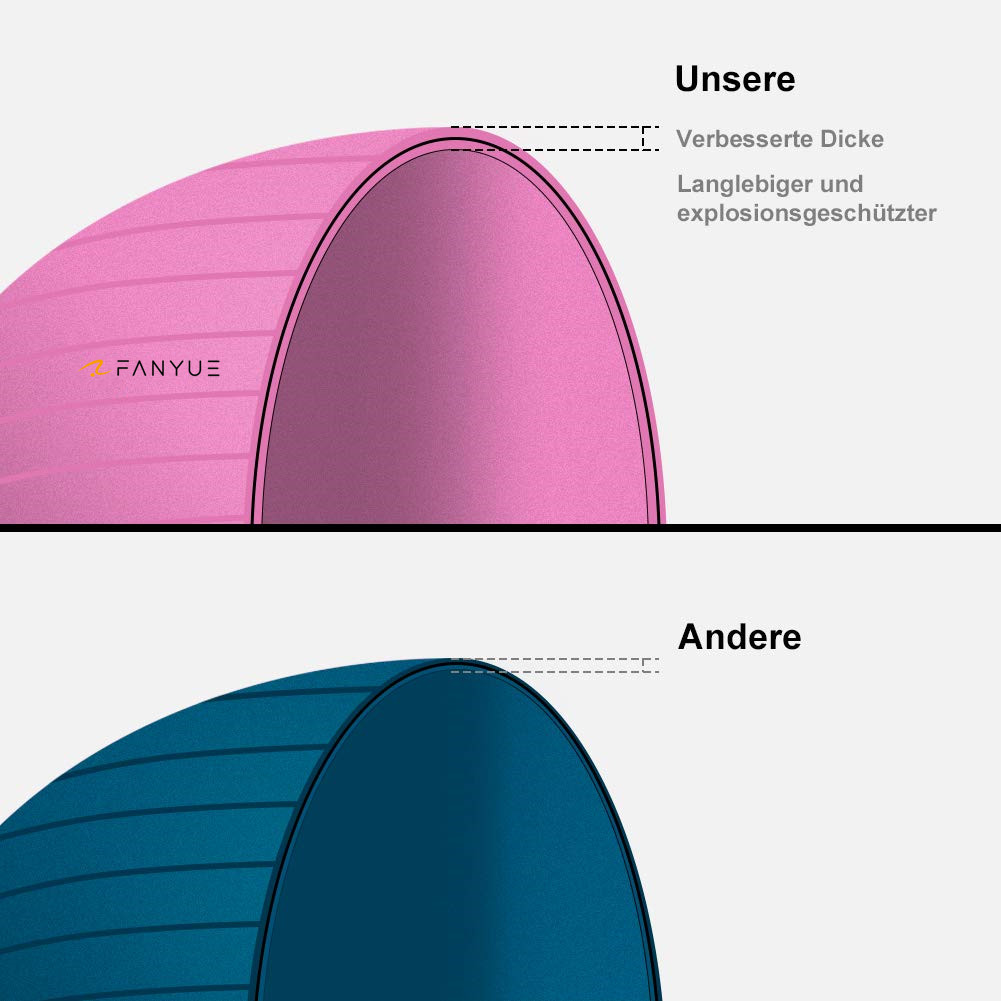
Material quality also matters significantly. An anti-burst PVC yoga ball is the preferred choice for any professional training environment because it deflates slowly if punctured rather than bursting suddenly, which substantially reduces injury risk. A non-slip surface texture further enhances safety and control, allowing the user to maintain positions that maximize muscle engagement without fear of slipping. When sourcing a yoga ball for gyms, physiotherapy clinics, or corporate wellness programs, anti-burst and non-slip certifications should be treated as non-negotiable baseline requirements.
Integrating the Yoga Ball into Structured Programs
To fully capture the muscle engagement benefits of the yoga ball, it should be integrated systematically rather than used sporadically. Fitness professionals typically recommend introducing the yoga ball during warm-up activation sets, mid-session accessory work, and cool-down mobility exercises. This approach ensures that the proprioceptive and stabilization benefits of the yoga ball are distributed across multiple phases of training rather than confined to a single isolated block. Consistency is key: regular yoga ball exposure is what drives the neural adaptations responsible for long-term efficiency gains.
FAQ
How often should I use a yoga ball to see muscle engagement benefits?
Using a yoga ball two to three times per week within a structured training program is generally sufficient to observe measurable improvements in core stability and stabilizer muscle activation. Consistency over several weeks produces the neural adaptations that drive lasting efficiency gains. Sporadic use of a yoga ball limits these adaptations, so regular integration is strongly recommended.
Is a yoga ball suitable for beginners or only advanced athletes?
A yoga ball is highly suitable for beginners because it can be introduced at low intensity, starting with seated balance exercises and progressing gradually to dynamic movements. The adjustable challenge level makes the yoga ball one of the most accessible fitness tools available. Beginners should start with supported yoga ball positions and advance to unsupported movements as balance and core strength improve.
What size yoga ball should I choose for my height?
As a general guide, users under 160 cm typically benefit most from a 55 cm yoga ball, users between 160 cm and 180 cm are best served by a 65 cm yoga ball, and users above 180 cm generally require a 75 cm yoga ball. Proper sizing ensures that the yoga ball provides the correct joint angles for optimal muscle activation and postural alignment during exercise.