 EN
EN


Joint stress is one of the most common concerns among fitness enthusiasts, rehabilitation patients, and older adults who want to stay active without risking injury. The question is straightforward: can a yoga ball really reduce stress on joints during workouts? The short answer is yes, and understanding how and why it works can help you make smarter training decisions. A yoga ball introduces instability, cushioning, and controlled range of motion that together create a gentler environment for the body's joints compared to rigid equipment or hard floor surfaces.
Using a yoga ball during exercise is not just a trend borrowed from physical therapy clinics. It represents a scientifically sound approach to fitness that prioritizes joint safety alongside strength building. Whether you are recovering from a knee injury, managing chronic back pain, or simply looking to train smarter, incorporating a yoga ball into your routine addresses the mechanical root causes of joint strain. This article explores how yoga ball training reduces joint loading, which exercises are most effective, and what practical benefits you can expect in your day-to-day workout sessions.
How a Yoga Ball Reduces Joint Loading
The Role of Instability in Protecting Joints
When you perform exercises on a hard, flat surface, your joints absorb the full force of gravity and momentum with very little help from surrounding stabilizing muscles. A yoga ball changes this dynamic entirely. Because the yoga ball surface is curved and slightly compliant, your body must continuously recruit stabilizing muscles around the hips, knees, ankles, and spine. This shared muscular engagement distributes mechanical load away from joint cartilage and bone, which is where damage and inflammation typically originate.
The unstable nature of a yoga ball also encourages smaller, more controlled movements. Large, jerky motions that spike joint pressure are naturally discouraged when you are balancing on a yoga ball. Over time, training on a yoga ball teaches your neuromuscular system to maintain alignment and avoid the compensatory movement patterns that often lead to joint overuse injuries. In this way, the yoga ball acts as both a tool and a teacher for joint-friendly movement.
Cushioning and Range of Motion Benefits
A yoga ball provides a degree of surface compliance that rigid benches and floors simply cannot offer. During exercises such as supported bridges, yoga ball squats, or core extensions, the yoga ball conforms subtly to body contours. This slight give reduces peak pressure points on sensitive areas including the tailbone, lower spine, and hip joints. For individuals with osteoarthritis or degenerative disc conditions, this cushioning effect from the yoga ball can make the difference between a productive session and one that leaves the joints inflamed and sore.
Additionally, a yoga ball allows a more natural range of motion during stretching and strengthening movements. Rather than forcing a joint into a fixed angle dictated by a machine, the yoga ball lets you move through arcs that suit your individual anatomy. This personalized range of motion reduces shear force on joint surfaces and supports healthier cartilage nutrition through the gentle compression and decompression that movement on a yoga ball promotes.
Key Yoga Ball Exercises for Joint Protection
Low-Impact Strengthening Movements
Several yoga ball exercises are particularly well suited for reducing joint stress while building functional strength. The yoga ball wall squat is a prime example. By placing a yoga ball between your lower back and the wall, you guide the squat movement along a smooth, supported path. This reduces lateral shear on the knees compared to a free-standing squat and keeps the spine in a neutral alignment that protects the lumbar discs. The yoga ball provides gentle rolling feedback that helps you maintain ideal form throughout the movement.
Yoga ball bridges are another highly effective option. Lying on your back with heels resting on a yoga ball, you lift the hips while keeping the core engaged. This exercise activates the glutes and hamstrings without loading the knee joint directly. The yoga ball introduces a balance challenge that forces the stabilizer muscles around the hip and knee to work together, building joint-protective strength over time. Consistently performing yoga ball bridges can reduce the risk of common lower body injuries such as IT band syndrome and patellar tendinopathy.
Core and Spinal Decompression Work
The yoga ball is especially valued for spinal health. Exercises such as the yoga ball prone extension, where you drape your torso over the yoga ball and gently extend the back, create traction and decompression in the lumbar vertebrae. This is the opposite of what happens when you sit at a desk for hours. The yoga ball encourages spinal curves to return to their natural alignment, reducing compressive forces that accumulate in the discs and facet joints.
Core exercises performed on a yoga ball, including planks with hands on the yoga ball and seated yoga ball rollouts, build deep abdominal and paraspinal strength. These muscles act as an internal brace for the spine, reducing the mechanical burden placed on spinal joints during daily activities and heavier workouts. A stronger core developed through yoga ball training translates directly into lower joint stress in almost every athletic movement.
Practical Considerations When Using a Yoga Ball
Choosing the Right Yoga Ball Size and Quality
Not all yoga ball products offer the same joint protection benefits. Ball size matters significantly. When seated on a yoga ball with feet flat on the floor, your knees should form roughly a 90-degree angle. A yoga ball that is too small forces the hips below the knees, increasing spinal compression rather than reducing it. A yoga ball that is too large places the hips too high, compromising balance and reducing the stabilizing muscle engagement that makes yoga ball training effective.
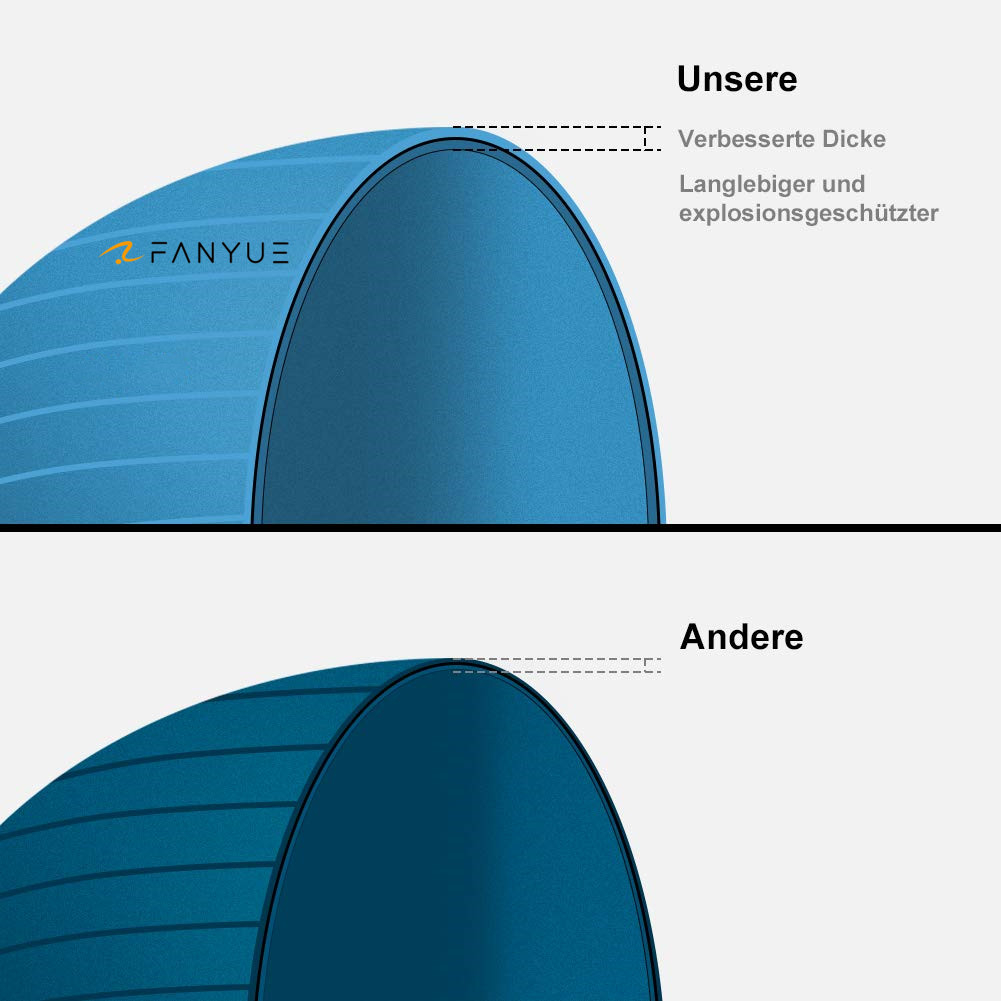
Material quality is equally important. An anti-burst yoga ball made from premium PVC can safely support adult body weight without risk of sudden deflation during use. Slow-deflate technology in a quality yoga ball ensures that if puncture occurs, the ball loses air gradually rather than collapsing suddenly, protecting the user from unexpected falls that could cause the very joint injuries the yoga ball is designed to prevent.
Frequency and Progression for Joint Health
Introducing a yoga ball into your workout routine gradually is the most joint-friendly approach. Starting with two or three yoga ball sessions per week allows the stabilizing muscles time to adapt before you increase intensity. As your neuromuscular system becomes more comfortable with yoga ball exercises, you can progress to more challenging variations that further reduce joint stress by building deeper muscular support. Consistency with yoga ball training over weeks and months produces the most lasting benefits for joint health and overall movement quality.
FAQ
Is a yoga ball suitable for people with existing knee problems?
Yes, many physical therapists recommend a yoga ball for individuals recovering from or managing knee conditions. Because a yoga ball reduces direct loading on the knee joint and promotes controlled movement, it is often safer than free-weight or machine-based alternatives. Always consult a healthcare professional before starting any new exercise routine with an existing knee condition.
How often should I use a yoga ball to see joint benefits?
Using a yoga ball two to four times per week is generally sufficient to experience meaningful improvements in joint stability and reduced discomfort. Sitting on a yoga ball at a desk for periods during the workday can also provide low-level spinal decompression benefits in addition to your dedicated yoga ball workout sessions.
Can a yoga ball replace traditional gym equipment entirely?
A yoga ball is a highly versatile tool but works best as a complement to a balanced fitness program. While a yoga ball can substitute for a weight bench in many exercises and replace machines for core work, combining yoga ball training with other modalities such as resistance bands or light free weights gives the most complete approach to building strength while protecting joint health.