 EN
EN


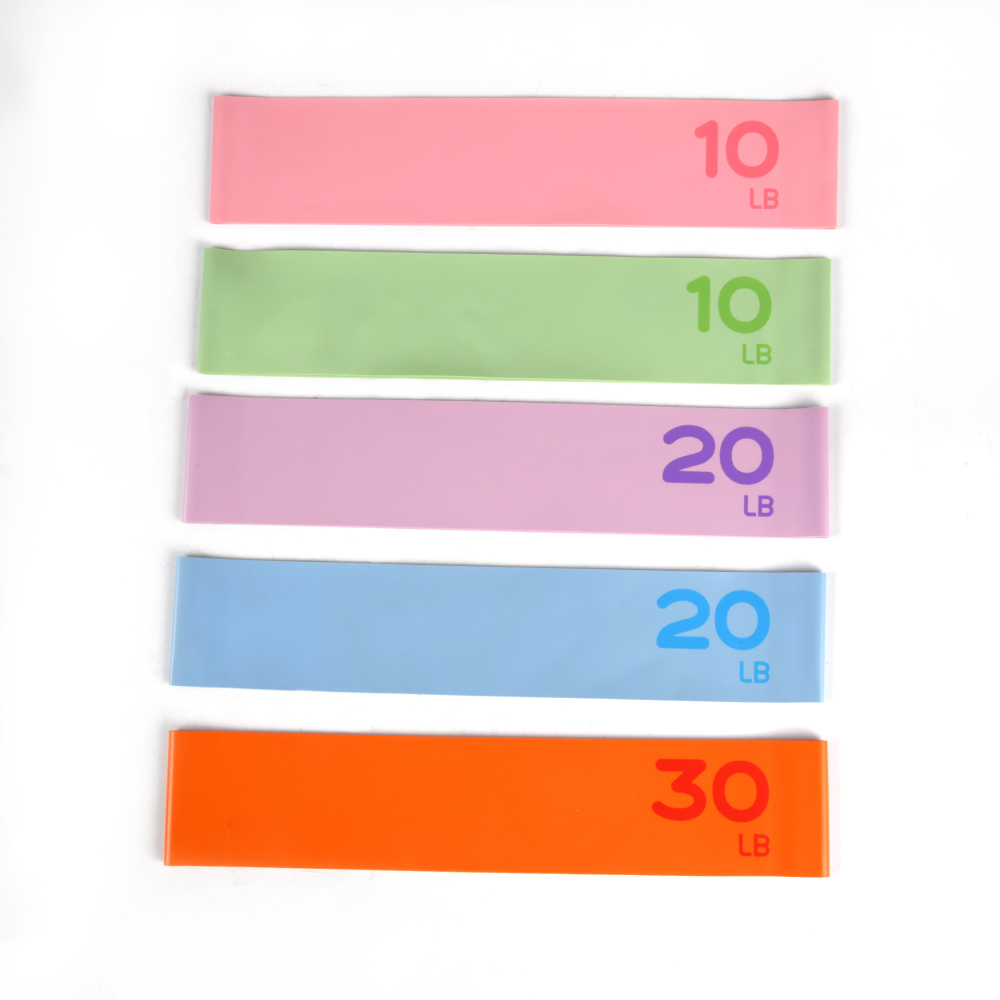
A mini loop band is one of the most effective tools for targeting the stabilizing muscles that conventional free weights often miss. Unlike machines or barbells, the mini loop band generates continuous, variable resistance throughout every movement, forcing smaller, deeper muscle groups to engage from start to finish. This makes the mini loop band especially valuable for athletes, rehabilitation patients, and fitness enthusiasts who need balanced, functional strength rather than just superficial muscle size.
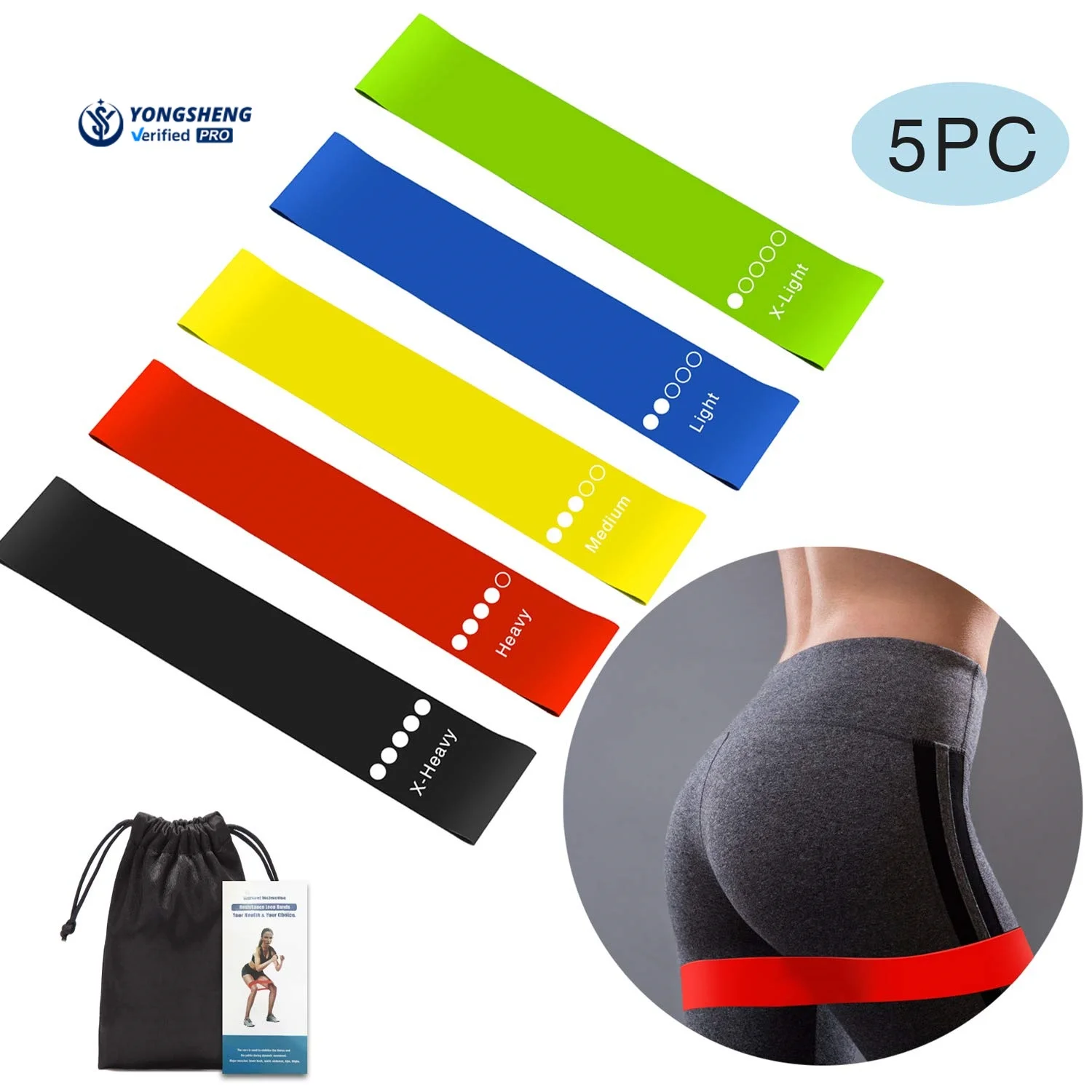
The reason the mini loop band works so well for stabilizing muscles comes down to the nature of elastic resistance itself. When you place a mini loop band around your thighs, ankles, or wrists, the band creates constant tension that your body must resist in every direction. This constant tension signals the neuromuscular system to recruit stabilizing fibers that would otherwise stay dormant during heavier compound lifts. Using a mini loop band regularly, therefore, builds a foundation of deep muscular stability that protects joints and improves overall movement quality.
How Mini Loop Band Resistance Activates Stabilizers
The Resistance Mechanism of a Mini Loop Band
The mini loop band operates on the principle of elastic resistance, meaning the tension increases as the band is stretched further. This ascending resistance curve is different from free weights, which provide a fixed load regardless of position. When a mini loop band is stretched during a squat, side step, or hip extension, the peak tension arrives exactly when the stabilizing muscles are under the most mechanical demand. This alignment between peak tension and peak muscular effort makes the mini loop band extraordinarily efficient for activating stabilizers that need precise, position-specific training cues.
A mini loop band also introduces a lateral or rotational challenge that purely vertical loads cannot replicate. When the mini loop band is placed above the knees during a squat, the hips must resist the inward pull of the band throughout the entire movement. This constant anti-rotation and anti-adduction demand forces the hip abductors and external rotators to work continuously, strengthening them far more effectively than isolated machine exercises. The mini loop band effectively turns every basic movement into a stability challenge.
Neuromuscular Activation Through Mini Loop Band Training
From a neuromuscular perspective, the mini loop band improves stabilizing strength by enhancing motor unit recruitment. Each time you push against a mini loop band, your nervous system must coordinate a larger number of smaller muscle fibers to maintain proper alignment and resist the band's pull. Over time, this repeated activation pattern trains the nervous system to recruit stabilizing muscles more efficiently, even during movements performed without a mini loop band. This neural adaptation is the reason athletes who train consistently with a mini loop band report improved balance, coordination, and joint stability across all their activities.
Key Stabilizing Muscles Targeted by Mini Loop Band Work
Hip and Glute Stabilizers Engaged by the Mini Loop Band
The gluteus medius and minimus are the primary hip stabilizers targeted during mini loop band exercises. These muscles sit on the outer surface of the hip and control the alignment of the femur during walking, running, and squatting. When a mini loop band is placed above the knees and the user performs side-lying leg raises, clamshells, or lateral walks, the gluteus medius is forced to work against the band's resistance with every repetition. Regular mini loop band training for these muscles reduces knee valgus, lowers injury risk, and improves the power transfer during athletic movements.
The piriformis and deep external hip rotators also respond strongly to mini loop band training. These small but critical muscles stabilize the hip joint during dynamic movements and protect the sacroiliac joint from excessive stress. A mini loop band placed around the ankles during monster walks or standing hip abductions forces these deep rotators to maintain tension throughout the exercise. Including mini loop band work for the deep hip rotators can significantly reduce lower back pain caused by poor hip stability.
Core and Knee Stabilizers Activated by the Mini Loop Band
The mini loop band is not limited to hip exercises. When placed around the wrists or forearms during plank variations, the mini loop band challenges the serratus anterior, obliques, and deep spinal stabilizers to resist lateral displacement. This anti-lateral resistance creates a more demanding core stability environment than a standard plank, accelerating the development of functional core strength. The mini loop band essentially amplifies the stabilizing demand of every core exercise it is added to.
At the knee, the mini loop band activates the vastus medialis oblique and the popliteus, two structures that stabilize the patella and prevent medial knee collapse. Exercises such as mini loop band terminal knee extensions and banded step-ups are widely used in physical therapy because the mini loop band provides just enough resistance to wake up these stabilizers without overloading the joint. Athletes recovering from knee injuries often use the mini loop band as a primary rehabilitation tool precisely because of this targeted stabilizing effect.
Effective Mini Loop Band Exercises for Stability Training
Lower Body Stability Moves With the Mini Loop Band
The clamshell is the foundational mini loop band exercise for hip stability. Lying on one side with the mini loop band above the knees, you rotate the top knee upward while keeping the feet together, directly isolating the gluteus medius. The lateral band walk is another essential mini loop band drill where the band is placed just above the knees or ankles and the user takes controlled side steps, keeping tension in the mini loop band at all times. Both exercises can be progressed by using a higher-resistance mini loop band or increasing the number of steps and repetitions.
The banded squat is perhaps the most versatile mini loop band exercise for lower body stability. With the mini loop band above the knees, the squatting motion forces the hips to push outward against the band on every repetition, training the glutes and external rotators under functional load. Adding the mini loop band to single-leg exercises such as Bulgarian split squats or single-leg deadlifts creates an even greater stability demand because the band must be resisted in multiple planes simultaneously.
Upper Body and Core Stability Moves With the Mini Loop Band
The mini loop band can be looped around the wrists to perform shoulder stability circuits that activate the rotator cuff, rear deltoids, and serratus anterior together. Exercises such as banded pull-aparts, face pulls, and overhead presses with the mini loop band held between the wrists challenge the shoulder girdle stabilizers in ways that standard pressing movements cannot. The mini loop band adds a constant spreading force between the wrists that the shoulder stabilizers must counteract throughout every repetition.
For core stability, placing the mini loop band around the ankles during a dead bug exercise dramatically increases the demand on the transverse abdominis and obliques. As you extend one leg against the resistance of the mini loop band, the anti-rotation demand increases significantly, forcing the deep core to work harder. Incorporating the mini loop band into bird dog, plank with lateral leg raise, and pallof-press variations creates a comprehensive stabilizing workout that addresses the entire kinetic chain.
FAQ
How often should I use a mini loop band for stabilizing muscle training?
Using a mini loop band for stabilizing muscle work two to four times per week is generally effective for most people. The mini loop band exercises are low-impact and can often be included as warm-up activation work before heavier training sessions. Because mini loop band movements focus on endurance-oriented stabilizing fibers, daily use at moderate intensity is also feasible for many individuals without causing excessive fatigue.
What resistance level of mini loop band should beginners use?
Beginners should start with a light to medium resistance mini loop band to ensure proper form before progressing. A mini loop band that is too heavy too early can cause compensatory patterns, which defeats the purpose of stabilizing muscle training. Most multi-resistance mini loop band sets include multiple resistance levels, allowing gradual progression as strength and stability improve over time.
Can a mini loop band replace heavier gym equipment for stability work?
For stabilizing muscle development specifically, a mini loop band is highly effective and does not require supplementation with heavy gym equipment. The mini loop band provides the type of variable, direction-specific resistance that stabilizing muscles respond to best. While heavier equipment remains important for building maximal strength, the mini loop band is sufficient as a dedicated stability and activation tool for both beginners and advanced athletes.