 EN
EN


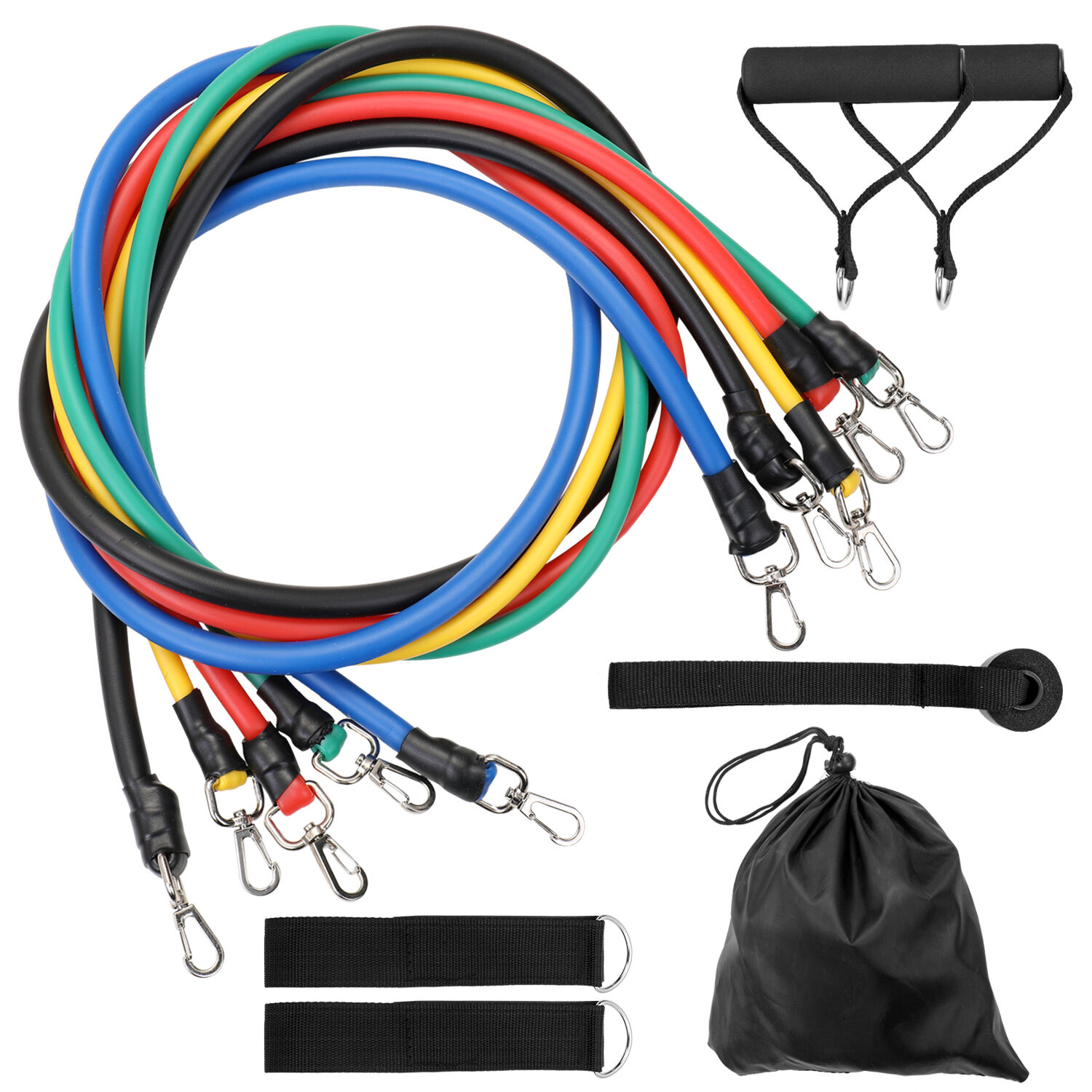
Breaking into a new fitness market requires more than just a great idea — it demands the right product foundation. For brands looking to scale quickly and establish a distinct identity, ODM resistance tubes offer a powerful and practical path forward. Rather than investing years in product development from scratch, brands can leverage existing manufacturing expertise, customized designs, and market-ready production lines to launch products that carry their unique identity and meet specific regional demands.
The global fitness equipment market has seen remarkable diversification, and resistance-based training products have moved from niche accessories to mainstream essentials. ODM resistance tubes sit at the intersection of versatility, affordability, and customization, making them especially attractive for brands targeting new geographies, new customer segments, or new retail verticals. Understanding how ODM resistance tubes accelerate market entry — and under what conditions they work best — is essential for any brand serious about sustainable expansion.
The ODM Model and What It Means for Fitness Brands
Defining ODM in the Context of Resistance Tube Production
ODM, or Original Design Manufacturing, refers to a model where a manufacturer designs and produces a product that a brand then markets under its own name. Unlike OEM arrangements where the brand supplies the design, ODM resistance tubes come with pre-engineered specifications that the brand can adapt, rebrand, and customize without managing the core engineering process. This distinction matters enormously when entering a new market where speed is a competitive advantage.
For fitness brands, ODM resistance tubes represent a category that is already technically refined. The resistance levels, latex formulations, tube diameters, and handle ergonomics have been developed and tested by experienced manufacturers. A brand entering a new market can therefore skip the prototype-and-fail cycle that often delays go-to-market timelines by months or even years. The result is a much faster, lower-risk path from concept to shelf.
When choosing ODM resistance tubes, a brand is essentially selecting from proven product architectures and then applying its own branding, color schemes, packaging, and accessory configurations. This combination of reliability and customization is precisely what makes ODM resistance tubes a market-expansion tool rather than just a sourcing shortcut.
Why ODM Differs From Generic Sourcing
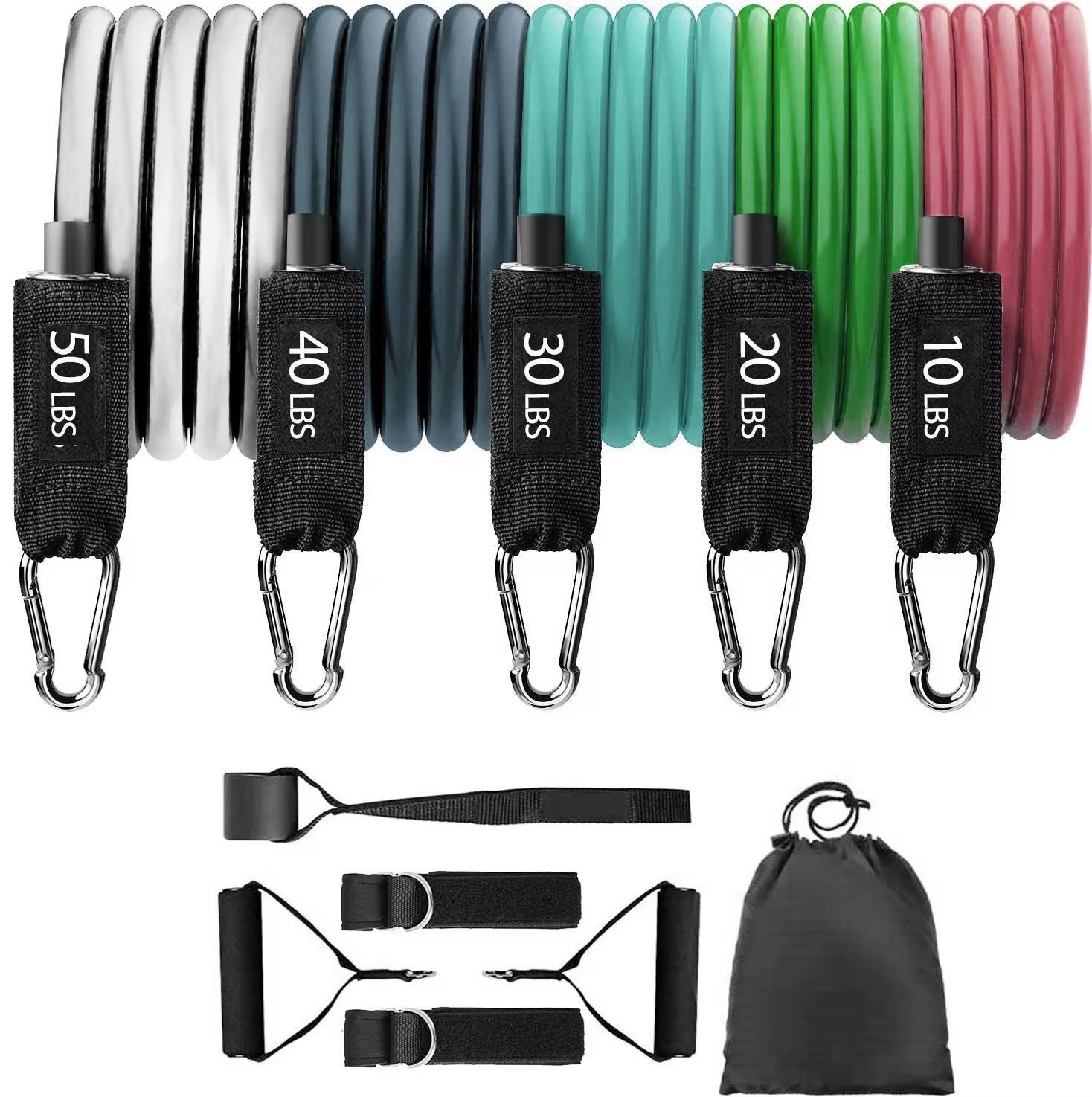
Many brands make the mistake of treating ODM resistance tubes as simply a cheaper version of buying generic products. The difference is fundamental. Generic sourcing offers no differentiation, no customization, and no brand integration. ODM resistance tubes, by contrast, give brands the ability to co-develop product variations, request specific resistance ranges such as stackable sets reaching 150 lbs, and specify handle materials, colors, and packaging in ways that make the product distinctly theirs.
This level of involvement creates a genuine product identity that resonates with target consumers in new markets. Whether a brand is entering the European home fitness segment, the Southeast Asian gym accessories channel, or the North American corporate wellness space, ODM resistance tubes allow the brand to present a product that feels purpose-built rather than off-the-shelf. That perception drives both retailer confidence and consumer loyalty.
How ODM Resistance Tubes Accelerate Market Entry
Reducing Time-to-Market With Pre-Engineered Solutions
Time-to-market is one of the most critical variables in market expansion. When a brand wants to enter a new region during peak fitness retail seasons — such as the January resolution period or pre-summer campaigns — it cannot afford a twelve-month product development cycle. ODM resistance tubes dramatically compress this timeline because the core product engineering is already complete. Brands typically only need to finalize branding elements, confirm resistance configurations, and place production orders.
A well-structured ODM partnership for resistance tubes can reduce a brand's time-to-market from over a year to as little as eight to fourteen weeks, depending on order volume and customization depth. This speed advantage is not trivial. It means a brand can respond to emerging market trends, capture seasonal demand windows, and outmaneuver competitors who are still finalizing product specs. For new market entry specifically, this agility is a strategic asset.
ODM resistance tubes also reduce the internal resource burden on the brand team. Engineering, quality testing, and compliance verification are handled at the manufacturing level, freeing the brand's team to focus on market positioning, distribution partnerships, and consumer education — the activities that directly drive market penetration in an unfamiliar territory.
Enabling Product Line Breadth Without Proportional Investment
Entering a new market with a single product is often insufficient. Retailers want range, and consumers want choice. ODM resistance tubes allow brands to offer a complete product line — light, medium, heavy, and extra-heavy resistance variants, stackable sets, handles with varying grip materials — without the investment that multiple custom-engineered products would normally require. By working within an ODM framework, a brand can launch a coherent product family that covers multiple consumer needs from the outset.
This breadth is particularly valuable when approaching new retail channels. A buyer from a major sporting goods chain is far more likely to engage with a brand that presents a complete resistance tube system than one offering a single SKU. ODM resistance tubes, because they exist within pre-engineered product families, make this kind of comprehensive range presentation straightforward and credible from day one.
Customization as a Market Differentiation Tool
Branding and Packaging Tailored to Regional Expectations
Different markets have different aesthetic expectations, regulatory requirements, and consumer communication preferences. ODM resistance tubes give brands the flexibility to adapt their packaging, labeling, and visual identity to each new market without altering the core product. A brand entering the German market might need CE compliance documentation and bilingual packaging, while a brand targeting Australian consumers might prioritize different color conventions and endorsement language. ODM manufacturers with experience in international markets can support these adaptations efficiently.
Beyond regulatory adaptation, packaging design plays a major role in how ODM resistance tubes are perceived in new retail environments. Shelf presence, instructional clarity, and perceived value are all influenced by packaging quality. Brands that invest in thoughtful packaging customization as part of their ODM strategy consistently report stronger sell-through rates in new markets, particularly when entering premium or specialty retail environments where shelf aesthetics matter.
Resistance Configuration and Product Specification Flexibility
Not all markets have identical fitness training cultures or consumer strength profiles. A brand entering a market where home workouts are the dominant fitness behavior might prioritize lighter resistance ranges and compact packaging suitable for small-space living. A brand targeting professional athletic performance training might require higher-resistance configurations and industrial-grade latex quality. ODM resistance tubes accommodate both scenarios because manufacturers can adjust latex wall thickness, tube length, and resistance gradation within the same base design framework.
This specification flexibility means that ODM resistance tubes are not a one-size-fits-all shortcut but rather a customizable foundation. Brands that take time to understand the physical fitness preferences, training environments, and price sensitivity of their new target market — and then communicate those insights to their ODM partner — end up with products that feel genuinely developed for that audience. This alignment between product specification and market need is one of the strongest drivers of successful market expansion with ODM resistance tubes.
Stackable systems, which allow users to combine multiple ODM resistance tubes for cumulative resistance levels, are particularly well-suited to markets where consumers want versatility from a single product set. Sets offering up to 150 lbs of combined resistance address the full spectrum from beginner to advanced training, making them compelling propositions for multi-demographic market entries.
Building Long-Term Brand Equity Through ODM Partnerships
Consistency, Quality, and Compliance as Market Trust Signals
Entering a new market is just the beginning. Sustaining presence and building brand equity requires consistent product quality that earns consumer trust over repeated purchases. ODM resistance tubes sourced from established manufacturers offer the quality consistency that builds this trust, because production standards, material sourcing, and quality control protocols are embedded in the ODM partner's operational processes. Brands benefit from this infrastructure without having to build it independently.
Compliance with local safety and material standards is another dimension where ODM partnerships add significant value. Experienced ODM manufacturers of resistance tubes typically maintain certifications relevant to major markets, including material safety standards, latex quality certifications, and product testing documentation. For brands entering markets with stringent import and retail compliance requirements, having a manufacturer that already operates within these frameworks eliminates a major barrier to entry.
Consumer trust in new markets is fragile and takes time to build. ODM resistance tubes that consistently perform as labeled — with resistance levels that are accurate, materials that are durable, and handles that are ergonomically comfortable — generate the positive reviews and repeat purchases that anchor a brand's reputation. Quality is not a luxury consideration in market expansion; it is a foundational requirement.
Iterative Product Evolution Based on Market Feedback
One of the most underappreciated advantages of working with an ODM partner on resistance tubes is the ability to iterate quickly based on market feedback. Once a brand has launched ODM resistance tubes in a new market and begins gathering consumer insights, it can bring those findings back to the manufacturer and request adjustments to resistance gradation, handle grip texture, or tube length in subsequent production runs. This iterative loop is far faster and less costly than developing new products from scratch.
This responsive evolution means that ODM resistance tubes become increasingly aligned with the specific demands of the new market over time, deepening the brand's competitive position and making it harder for later entrants to displace. A brand that entered a market with a well-chosen ODM product and then refined it through two or three production iterations will have a product that feels highly native to that market — even though it was built on a proven, efficient ODM foundation.
Strategic Considerations for Brands Evaluating ODM Resistance Tubes
Selecting the Right ODM Partner for Market Expansion Goals
Not all manufacturers of ODM resistance tubes have equal capability to support market expansion. Brands should evaluate potential ODM partners on several dimensions: the depth of their product catalog, their experience with international compliance, their minimum order quantities in relation to new market test volumes, their customization capabilities, and their responsiveness to design modification requests. A partner with a broad existing catalog of resistance tube configurations provides more flexibility and speed than one with a narrower range.
Communication and project management capability also matter significantly. Entering a new market involves tight timelines and coordination across packaging design, logistics, and retail buyer presentations. An ODM manufacturer that treats brand partners as collaborative stakeholders — rather than as transactional order placers — adds disproportionate value during the complexity of market entry. Brands should look for manufacturers who demonstrate this orientation in their initial interactions.
Margin Structures and Volume Scaling in New Markets
Financial viability is central to any market expansion strategy. ODM resistance tubes offer a favorable margin structure for new market entry because the R&D cost is distributed across the manufacturer's broader production base rather than borne entirely by the brand. This cost efficiency allows brands to enter new markets at competitive price points while maintaining healthy margins, which is critical when building retailer relationships in unfamiliar territories where payment terms and promotional support expectations can be demanding.
As market presence grows and order volumes increase, brands can renegotiate ODM pricing to improve margins further, invest those gains into marketing or distribution expansion, and deepen their product range. The scalability of the ODM model means that what begins as a lean market entry strategy can evolve into a fully competitive, high-volume commercial operation without requiring a fundamental change in sourcing approach. ODM resistance tubes, in this sense, are not just a market entry tactic — they are a scalable growth infrastructure.
FAQ
What makes ODM resistance tubes different from standard private label products?
ODM resistance tubes differ from standard private label products in the degree of design involvement and product development maturity. With ODM, the manufacturer brings an already-engineered product design that the brand customizes and claims as its own. Standard private label typically means applying only branding to a fully generic product with no meaningful customization. ODM resistance tubes allow resistance level selection, material specification, handle design preferences, and packaging customization — creating a product that genuinely reflects the brand's positioning rather than simply carrying its logo.
How do ODM resistance tubes help a brand compete in markets where local products already exist?
In markets with established local products, ODM resistance tubes give incoming brands a way to differentiate on quality, branding, and product completeness rather than competing purely on price. By offering higher-grade latex materials, ergonomic accessories, comprehensive resistance ranges, and professional packaging, a brand using ODM resistance tubes can position itself as a premium or specialist alternative to locally produced goods. The speed and cost efficiency of the ODM model also allow the brand to invest saved resources into marketing and distribution, which is often where market share is actually won.
Can ODM resistance tubes be customized for specific fitness training disciplines?
Yes. ODM resistance tubes can be configured for a wide range of training disciplines, from general home fitness to physical therapy rehabilitation, athletic performance training, and corporate wellness programs. Customization can include resistance level calibration appropriate for specific user populations, handle styles suited to different grip requirements, tube lengths optimized for specific exercise ranges, and instructional materials tailored to the target discipline. This level of specialization makes ODM resistance tubes highly adaptable for brands targeting niche markets within a new geographic territory.
What minimum order volumes are typically required for customized ODM resistance tubes?
Minimum order volumes for ODM resistance tubes vary depending on the manufacturer and the extent of customization requested. Generally, more extensive customization — such as unique tube colors, custom handle materials, or proprietary packaging structures — requires higher minimum quantities to justify the tooling or setup costs. However, many experienced ODM manufacturers offer tiered options that allow brands to start with moderate quantities for new market testing and scale volumes as demand is confirmed. Brands entering new markets are advised to discuss phased production options with their ODM partner to balance customization goals with prudent inventory risk management.
Table of Contents
- The ODM Model and What It Means for Fitness Brands
- How ODM Resistance Tubes Accelerate Market Entry
- Customization as a Market Differentiation Tool
- Building Long-Term Brand Equity Through ODM Partnerships
- Strategic Considerations for Brands Evaluating ODM Resistance Tubes
-
FAQ
- What makes ODM resistance tubes different from standard private label products?
- How do ODM resistance tubes help a brand compete in markets where local products already exist?
- Can ODM resistance tubes be customized for specific fitness training disciplines?
- What minimum order volumes are typically required for customized ODM resistance tubes?