 EN
EN


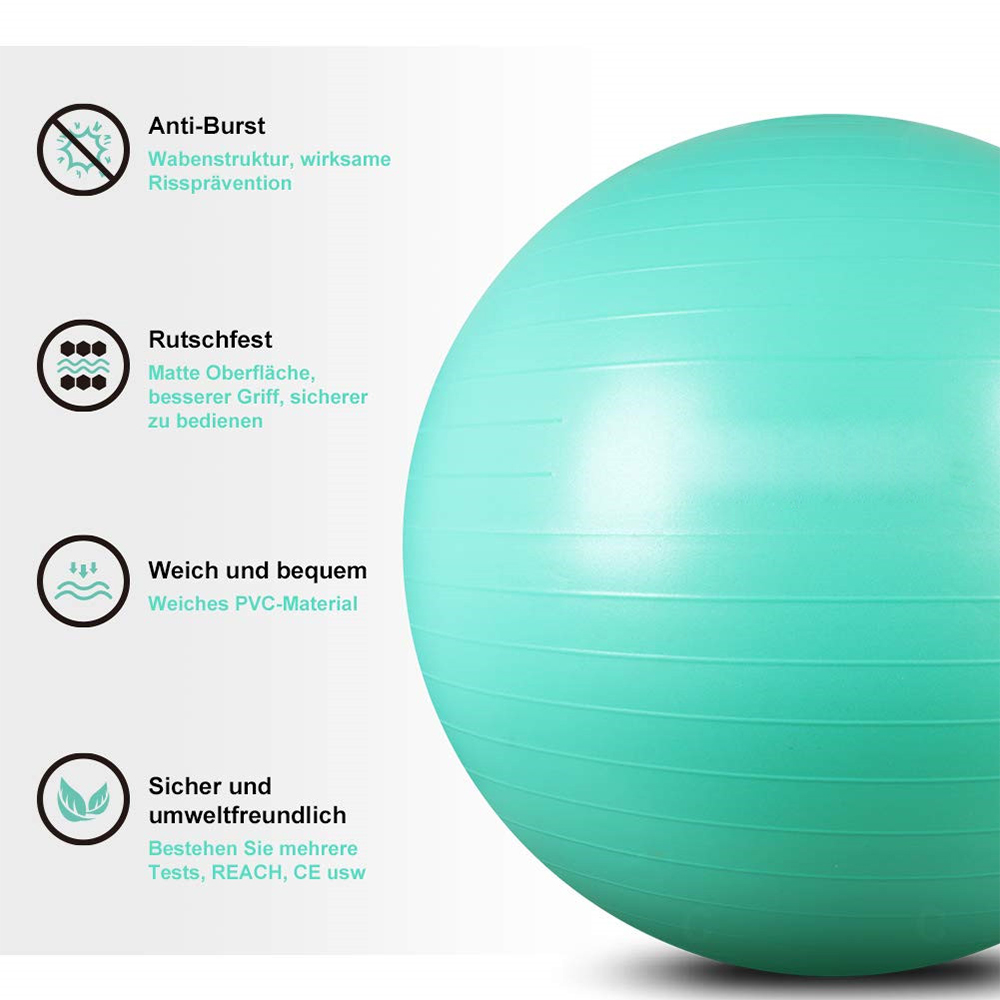
The yoga ball has become one of the most effective tools for improving abdominal muscle activation in both fitness training and rehabilitation settings. Unlike flat-surface exercises, using a yoga ball introduces instability that forces the core to engage more deeply and consistently throughout each movement. This unique property makes the yoga ball a standout choice for anyone who wants stronger, more responsive abdominal muscles.
Understanding how a yoga ball activates abdominal muscles requires looking at the science of unstable surface training. When you perform a crunch or plank on a yoga ball, the body constantly makes micro-adjustments to maintain balance. These micro-adjustments are driven by the deep core stabilizers, including the transverse abdominis and internal obliques, which typically receive less stimulation during conventional floor exercises. This article explains exactly how yoga ball training improves abdominal activation and how to apply it effectively in your routine.
The Mechanism Behind Yoga Ball Core Activation
Instability as a Core Training Catalyst
A yoga ball creates an unstable surface that the nervous system must constantly respond to during exercise. When you lie back on a yoga ball for a crunch, your body cannot rely on a rigid floor for support. Instead, the deep abdominal muscles fire continuously to keep the yoga ball stable beneath you. Research in exercise science consistently shows that performing crunches on a yoga ball produces significantly higher abdominal muscle activation compared to performing the same movement on the floor. The yoga ball essentially amplifies the demand placed on your core.
Recruitment of Deep Stabilizing Muscles
Conventional abdominal exercises like standard crunches primarily target the rectus abdominis, the visible 'six-pack' muscle. A yoga ball, however, shifts additional demand toward the transverse abdominis, the deepest abdominal layer responsible for spinal stability. When the yoga ball rolls or shifts, the transverse abdominis fires harder to prevent unwanted movement. This deep engagement is critical for building functional core strength rather than purely aesthetic abdominal development. Training with a yoga ball ensures that your core functions as a complete unit.
Key Yoga Ball Exercises for Abdominal Activation
Yoga Ball Crunches and Rollouts
The yoga ball crunch is the most widely used exercise for targeting the rectus abdominis with greater range of motion. By positioning the lower back on the yoga ball, the abdominals stretch further at the bottom of the movement, producing a longer contraction arc than a standard floor crunch. This extended range increases muscle fiber recruitment and deepens the activation signal sent to the core. Yoga ball rollouts are equally valuable: kneeling and rolling the yoga ball forward with the forearms forces the abdominals to resist spinal extension actively, which creates intense isometric loading across the entire core.
Yoga Ball Planks and Pass-Through Drills
Placing your forearms on a yoga ball during a plank dramatically increases core demand compared to a standard forearm plank. The yoga ball tends to shift in all directions, so the abdominals, obliques, and stabilizers must all work simultaneously to hold alignment. Yoga ball pass-through drills, where the yoga ball is transferred from the hands to the feet while lying flat, require the hip flexors and abdominals to co-contract throughout the exchange. This combined demand makes the yoga ball pass-through one of the most comprehensive abdominal activation drills available. Incorporating these movements into a regular program produces measurable improvements in core endurance and strength.
Programming Yoga Ball Training for Consistent Progress
Structuring Frequency and Progression
For consistent abdominal activation gains, yoga ball training should be performed two to three times per week with adequate recovery between sessions. Beginners using a yoga ball should start with supported movements, such as seated balance holds on the yoga ball, before progressing to dynamic exercises like crunches and rollouts. As stability improves, increasing the range of motion, duration of holds, or resistance applied will continue to challenge the abdominals effectively. A yoga ball program structured around progressive overload ensures the core muscles adapt continuously rather than plateauing. Tracking volume and intensity helps maintain the upward progression needed for lasting results.
Integrating Yoga Ball Work with Full Routine
A yoga ball is most effective when integrated into a broader strength and conditioning program rather than used in isolation. Pairing yoga ball core work with compound lifts, mobility drills, and aerobic training creates a complete fitness approach. Using a yoga ball as a bench substitute during dumbbell exercises also engages the abdominals constantly, turning otherwise standard movements into multi-muscle activation sessions. The yoga ball can also serve as a recovery and posture-correction tool between intense training days, allowing the core to stay active without excessive fatigue. This flexible application makes the yoga ball one of the most versatile pieces of equipment in any gym or home setup.
FAQ
How often should I use a yoga ball for abdominal training?
Using a yoga ball for abdominal training two to three times per week is sufficient for most people to see meaningful improvements in core activation and strength. Allow at least one day of rest between yoga ball sessions to permit muscle recovery. Consistent, progressive training with a yoga ball over several weeks will produce noticeable gains in abdominal endurance and stability.
Is a yoga ball suitable for beginners working on core strength?
Yes, a yoga ball is suitable for beginners as long as the starting exercises match the individual's current stability level. New users should begin with seated balance holds on the yoga ball and gradually progress to supported crunches before attempting advanced movements like rollouts. The yoga ball is forgiving and adjustable in difficulty, making it an excellent entry point for core conditioning at any fitness level.
What size yoga ball should I use for abdominal exercises?
The appropriate yoga ball size depends primarily on your height. A 55 cm yoga ball is generally recommended for individuals under 5 feet 4 inches, while a 65 cm yoga ball suits those between 5 feet 4 inches and 5 feet 11 inches. Taller individuals typically benefit from a 75 cm yoga ball. Using the correct yoga ball size ensures proper body alignment and maximizes abdominal activation during each exercise.