 EN
EN


The yoga ball has become one of the most recognizable pieces of fitness equipment in gyms, rehabilitation clinics, and home workout spaces. As educational institutions increasingly look for ways to promote physical wellness and active engagement, the yoga ball has entered a new arena: the classroom and school fitness setting. Before making a purchasing decision, educators, fitness coordinators, and school administrators need to understand whether a yoga ball genuinely fits educational environments or whether it is better suited to more controlled fitness contexts.
The short answer is yes — a yoga ball is highly suitable for educational fitness settings, provided it is selected thoughtfully and used with proper guidance. A yoga ball engages core muscles, encourages better posture, and supports kinesthetic learning, all of which align naturally with the goals of physical education and wellness programs in schools. This article explores the specific reasons why a yoga ball works well in educational contexts, how to implement it effectively, and what practical considerations matter most when equipping a school fitness program.
Benefits of a Yoga Ball in Educational Fitness
Core Stability and Posture Development
One of the most documented benefits of a yoga ball is its ability to activate core stabilizing muscles during use. When a student sits or exercises on a yoga ball, the body must make constant small adjustments to maintain balance. These micro-adjustments engage the abdominal and spinal muscles continuously, which builds functional core strength over time. For growing students who spend long hours seated, a yoga ball offers a dynamic alternative that discourages slouching and supports healthy spinal alignment.
In physical education classes, a yoga ball can be incorporated into warm-up routines, stretching sessions, and balance training circuits. The instability of a yoga ball forces students to become more aware of their body positioning, which is a foundational element of physical literacy. Teachers who have introduced a yoga ball into structured activities often report that students demonstrate improved coordination and body awareness within a few weeks of consistent practice.
Engagement and Active Learning
Educational research increasingly supports the idea that physical movement enhances cognitive engagement. A yoga ball introduces a playful yet purposeful element into fitness lessons. Students who might find traditional gym equipment intimidating often respond more positively to a yoga ball because it feels approachable and versatile. Whether used for seated balance work, gentle stretching, partner exercises, or guided relaxation breathing, a yoga ball keeps students physically active and mentally focused.
Beyond the gymnasium, some progressive schools have introduced a yoga ball as an alternative seating option in classrooms during designated movement breaks. The yoga ball in this context promotes light physical engagement that supports attention and reduces restlessness, particularly for students who have high physical activity needs. This dual-purpose nature makes a yoga ball a remarkably cost-effective tool for educational institutions.
Selecting the Right Yoga Ball for School Use
Size and Weight Capacity Considerations
Choosing the correct yoga ball size is essential for safety and effectiveness in an educational setting. A yoga ball that is too large or too small will not provide the correct postural angle or the proper balance challenge. For most school-age populations, yoga ball sizes between 45 cm and 65 cm cover the majority of student height ranges. A student whose feet rest flat on the floor while seated on a yoga ball at a 90-degree hip angle is using the correct size. Fitness coordinators should stock multiple yoga ball sizes to accommodate different age groups within the same institution.
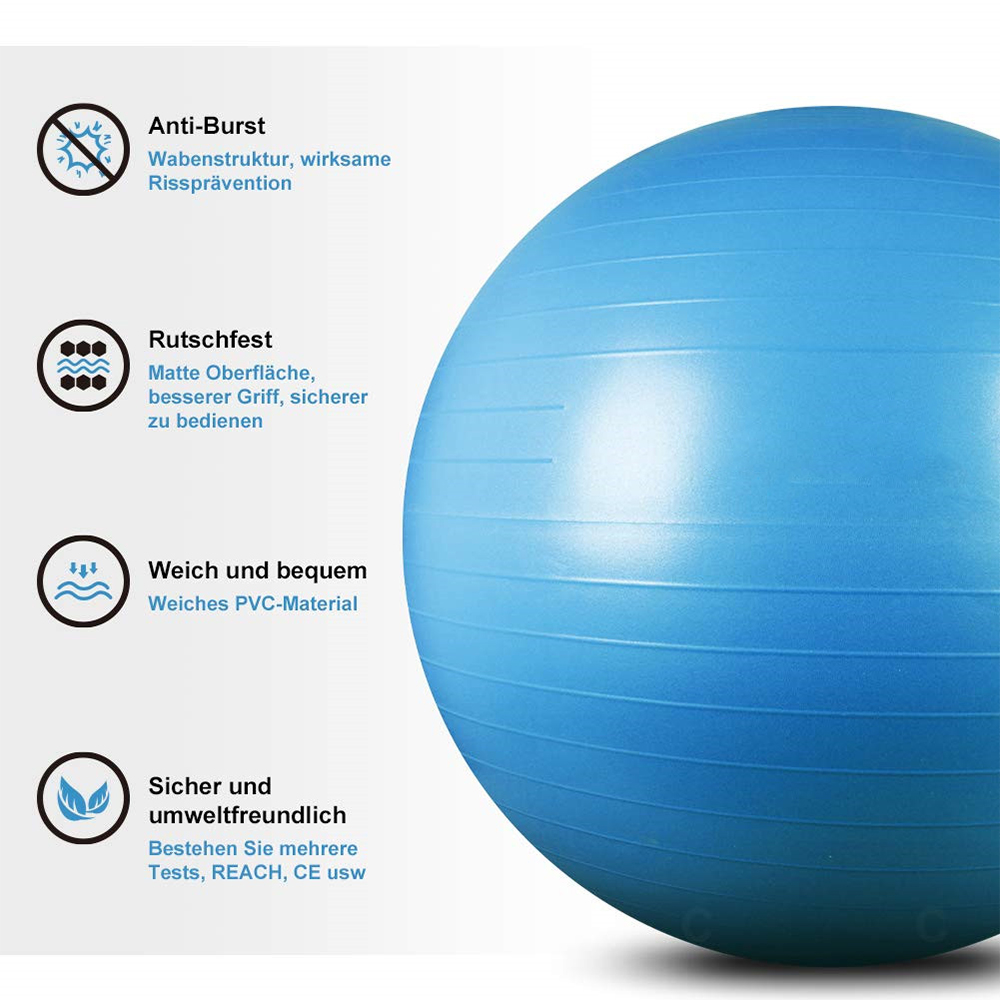
Weight capacity is another critical factor. A quality yoga ball designed for fitness use should support the weight range of the students who will use it. Anti-burst construction is especially important in school environments where a yoga ball may experience heavier or less controlled use than in a professional gym. An anti-burst yoga ball will deflate gradually rather than burst suddenly if punctured or overstressed, which significantly reduces the risk of injury.
Surface, Durability, and Maintenance
A non-slip surface on a yoga ball is a practical necessity in educational fitness settings. Students move quickly and may transition between activities, so a yoga ball with a textured grip surface reduces the chance of slipping during use. PVC-based yoga ball options with anti-slip textures are widely available and offer a good balance of durability and affordability for bulk school purchases. When sourcing a yoga ball for institutional use, prioritize products that specify non-slip and anti-burst properties clearly.
Maintenance of a yoga ball in a school context is straightforward. Most yoga ball products can be wiped clean with standard disinfectant solutions, which is essential when equipment is shared among many students. Regularly checking the inflation level of each yoga ball ensures consistent performance and safety. A properly inflated yoga ball maintains its shape, provides the correct resistance, and reduces wear on the PVC material over time.
Implementing Yoga Ball Activities in Educational Programs
Structured vs. Unstructured Use
The yoga ball performs best in educational fitness settings when its use is structured and purposeful. Fitness educators should introduce the yoga ball with a brief orientation session that covers proper mounting, dismounting, and balance techniques. Students who understand how to use a yoga ball safely are far less likely to misuse it or create unnecessary hazards. A yoga ball should always be used on a clean, flat surface free from sharp objects or slippery conditions.
Structured yoga ball activities might include seated balance holds, wall squats using a yoga ball, gentle core rolling exercises, and guided partner balancing routines. Each yoga ball activity can be scaled to different fitness levels, making the yoga ball inclusive for mixed-ability groups. Fitness teachers who build a yoga ball into weekly lesson plans consistently report that students develop both physical skills and positive attitudes toward fitness more rapidly than with static equipment alone.
Integrating a Yoga Ball into Broader Wellness Goals
A yoga ball fits naturally into holistic school wellness programs that address physical health, mental well-being, and stress management. Breathing exercises performed while seated on a yoga ball can help students practice mindfulness and relaxation. Gentle yoga ball stretches support flexibility development, which is often neglected in standard school fitness curricula. When a yoga ball is positioned as part of a broader wellness toolkit rather than a standalone novelty item, its educational value becomes much clearer.
Schools that have embedded a yoga ball into both physical education classes and general wellness programming report higher student participation rates in fitness activities. A yoga ball democratizes fitness by lowering the barrier to entry, offering a yoga ball exercise option that requires no prior athletic experience and delivers real physical benefit from the first session onward.
FAQ
What age group benefits most from a yoga ball in school fitness programs?
A yoga ball is suitable for students of all age groups, from primary school through secondary and higher education. Younger students benefit from the balance and coordination challenges a yoga ball provides, while older students can use a yoga ball for core strengthening, flexibility, and stress-relief exercises. Selecting the correct yoga ball size for the student's height is the most important factor regardless of age.
How many yoga ball units should a school purchase for a fitness program?
The number of yoga ball units needed depends on class size and intended use. For whole-class physical education activities, one yoga ball per student ensures full participation. For circuit-based programs or wellness corners, a smaller ratio such as one yoga ball for every three to four students may be sufficient. Purchasing a yoga ball in bulk often reduces per-unit cost significantly and ensures consistent quality across all units.
Is a non-slip anti-burst yoga ball necessary for school use?
Yes, a non-slip anti-burst yoga ball is strongly recommended for school fitness settings. The anti-burst feature ensures that if a yoga ball is damaged, it deflates slowly rather than bursting suddenly, which protects students from falls or shock. The non-slip surface of a quality yoga ball prevents dangerous slipping during exercises, especially when students transition quickly between activities in a busy gym or classroom environment.