 EN
EN


A pull up assist band is one of the most practical tools in modern fitness training, offering a simple yet highly effective way to make pull-up movements accessible to a wider range of athletes. Whether you are a beginner who cannot yet complete a single unassisted rep or an intermediate lifter building toward strict muscle-ups, the pull up assist band provides the support your body needs to engage the right muscles, develop strength progressively, and stay consistent in training. Accessibility in fitness is not a luxury — it is a foundation for long-term results, and the pull up assist band sits squarely at the center of that idea.
Understanding how the pull up assist band actually improves workout accessibility requires a look at both biomechanics and practical training design. The band functions as a dynamic counterweight, reducing the effective load your upper body must lift on each rep. This elastic assistance scales down naturally — the band assists most at the bottom of the movement and least at the top, which encourages the lifter to finish each rep with genuine muscular effort. That intelligent load curve is exactly what makes the pull up assist band such a valuable progression tool across all fitness levels.
The Mechanics Behind Pull Up Assist Band Support
How Elastic Resistance Creates a Progressive Load Curve
The pull up assist band operates on the principle of elastic resistance, which means the level of assistance it provides changes throughout the range of motion. At the lowest point of the hang position, where gravitational pull is greatest, the pull up assist band is most stretched and therefore provides the most upward force. As the lifter rises and the band shortens, assistance decreases gradually. This natural load progression means the muscle fibers must work harder during the final phase of each rep, which is actually the phase most critical for developing pulling strength in the shoulders, lats, and biceps.
For a beginner, this elastic assist removes the intimidation barrier that prevents many people from ever attempting pull-up movements. With a pull up assist band, the lifter can complete full range-of-motion reps from day one, which builds the neuromuscular patterns needed for eventual unassisted performance. For gyms and B2B fitness equipment buyers, the pull up assist band offers a scalable solution that serves users across a very broad skill spectrum without requiring multiple separate machines or attachments.
Band Resistance Levels and Workout Customization
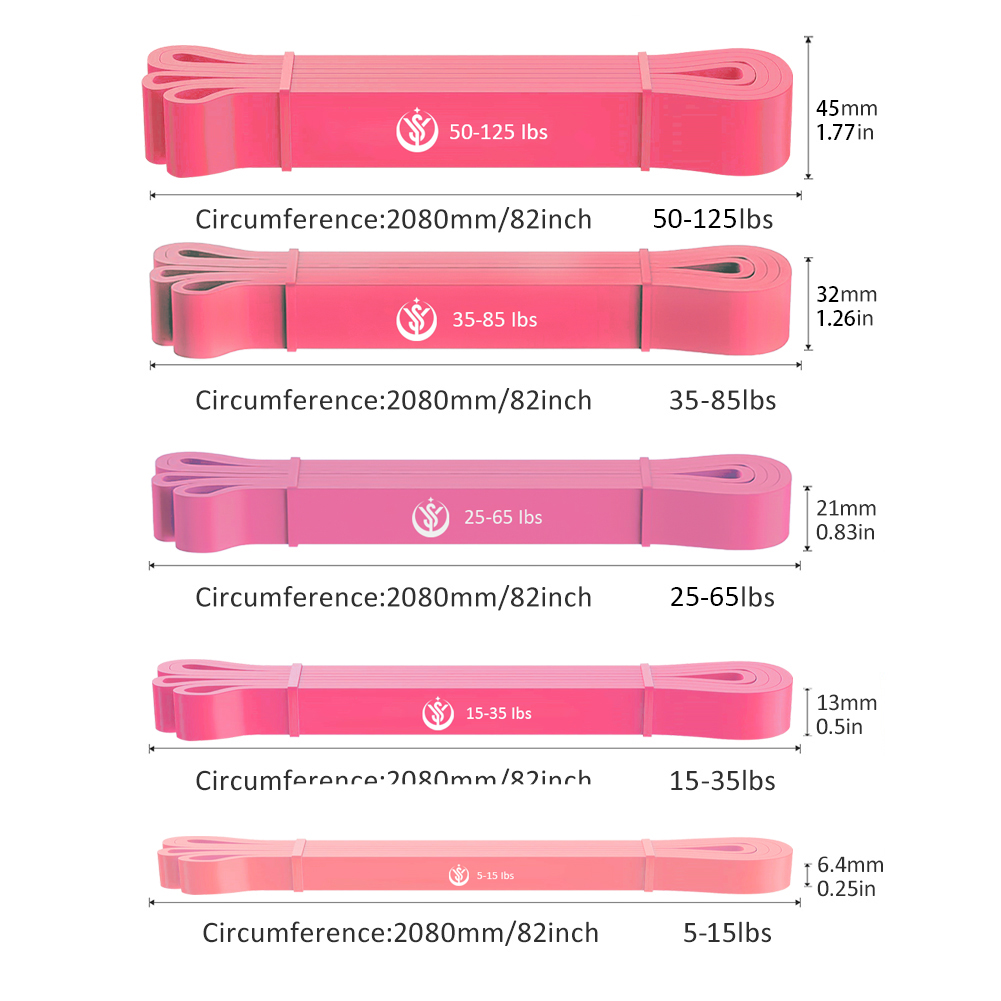
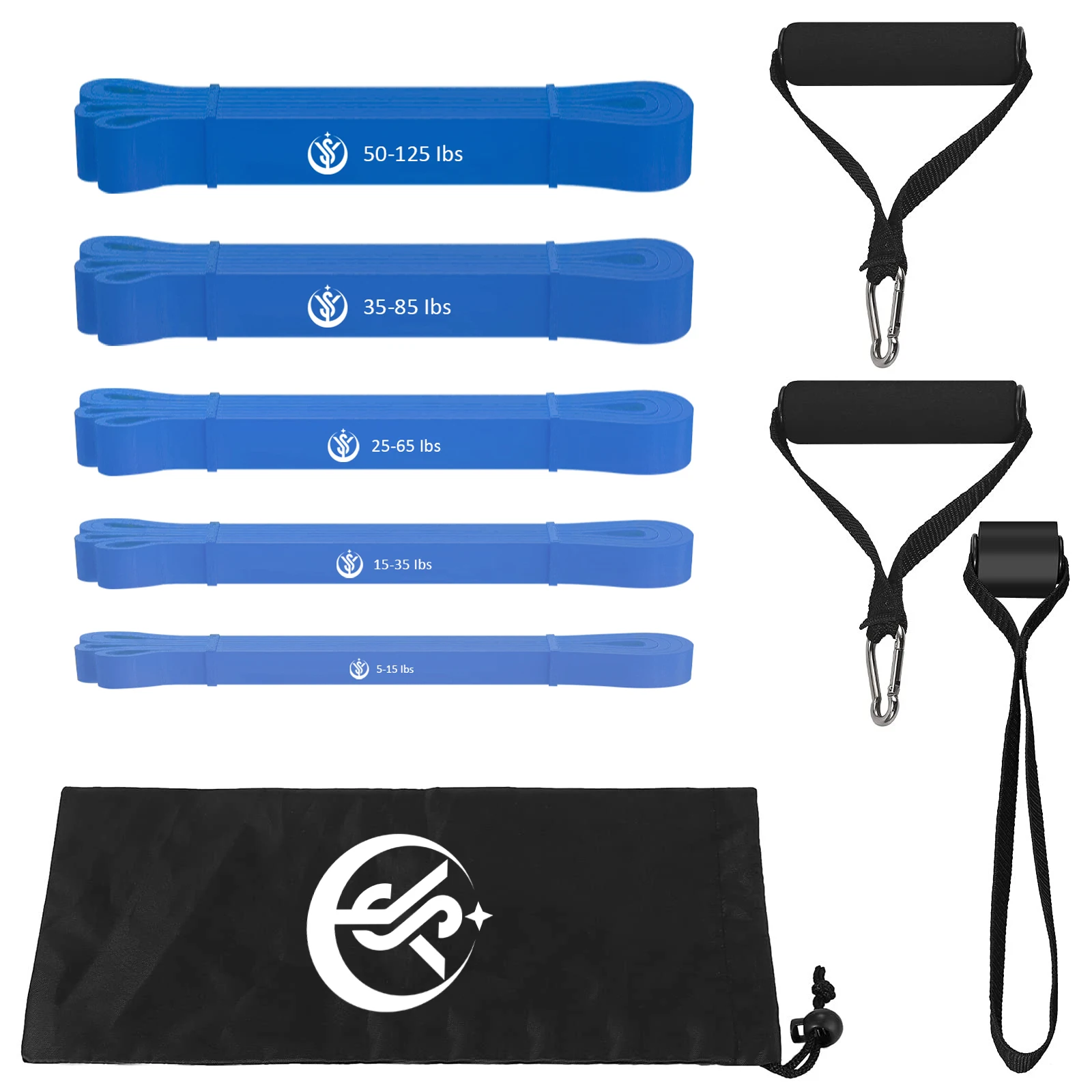
Pull up assist band products are typically available in multiple resistance levels, often categorized by thickness and pounds of assistance. A light pull up assist band might provide 5 to 35 pounds of assist, while a heavy pull up assist band can provide up to 125 pounds of support. This range of options means that a single pull up assist band set can serve a gym's lightest beginner and its strongest intermediate member simultaneously. Fitness facilities, home gym builders, and corporate wellness program managers all benefit from stocking multiple resistance levels of the pull up assist band, because it eliminates the need to segregate users by ability and makes shared equipment far more practical.
How Pull Up Assist Band Training Builds Strength Over Time
Progressive Overload Through Band Resistance Reduction
One of the most important principles in strength training is progressive overload — the idea that muscles grow stronger when they are consistently challenged with increasing demands. The pull up assist band fits seamlessly into this principle. A lifter begins with a heavy pull up assist band, completes sets with good form and full range of motion, and over several weeks transitions to a lighter pull up assist band as their raw pulling strength increases. This structured progression is clear, measurable, and motivating because every step down in band resistance represents a visible gain in strength. B2B buyers sourcing equipment for training facilities should note that offering a complete set of pull up assist band options is essential to supporting this progression pathway.
Without a pull up assist band, many novice lifters resort to partial-range movements or jumping pull-ups, both of which develop strength unevenly and increase injury risk. The pull up assist band ensures that every rep is a full, controlled movement, which accelerates skill development and reduces the likelihood of compensatory muscle imbalances. Coaches and personal trainers who integrate pull up assist band training into their programming consistently report faster strength gains among beginners compared to unassisted partial-rep approaches.
Maintaining Volume and Frequency With Assisted Training
Training volume — the total number of quality reps completed per session — is one of the strongest predictors of muscle hypertrophy and functional strength. The pull up assist band makes it possible for beginners and recovering athletes to complete significantly higher training volumes than they could manage without support. A person who can do one unassisted pull-up might struggle to accumulate 20 quality reps in a session. With a pull up assist band, that same person might complete 40 or 50 reps across multiple sets, all with proper form. That dramatically higher volume accelerates adaptation and makes the pull up assist band an indispensable tool for any serious training program designed with accessibility in mind.
Pull Up Assist Band Applications Across Different Training Contexts
Home Gyms, Commercial Facilities, and Rehabilitation Settings
The pull up assist band is versatile enough to serve multiple distinct training environments. In home gym setups, the pull up assist band is a compact, affordable alternative to bulky assisted pull-up machines. It loops over any standard pull-up bar and can be stored easily when not in use. In commercial fitness centers, the pull up assist band station requires minimal floor space and no electrical installation, making it a cost-efficient choice for facility managers. In physical therapy and rehabilitation contexts, the pull up assist band allows clinicians to reintroduce overhead pulling movements to patients recovering from shoulder or elbow injuries, where full bodyweight loading would be contraindicated.
Cross-Training, Mobility Work, and Warm-Up Protocols
Beyond its primary role in pull-up progression, the pull up assist band is widely used in cross-training programs for banded muscle-up transitions, shoulder mobility drills, and resistance stretching. Many athletes use a lighter pull up assist band during warm-up protocols to activate the lats, rotator cuff muscles, and scapular stabilizers before heavier overhead pressing or rowing movements. This secondary functionality makes the pull up assist band a multi-purpose investment for any fitness program, increasing its return-on-investment value for B2B buyers sourcing equipment for diverse user populations. When a single tool like the pull up assist band can serve strength training, rehabilitation, mobility work, and warm-up routines simultaneously, it earns its place as a foundational piece of gym equipment rather than a niche accessory.
FAQ
What resistance level of pull up assist band should a beginner use?
Beginners should typically start with a heavy pull up assist band that provides enough support to allow full range-of-motion reps with controlled form. As pulling strength develops over several weeks, transitioning to a lighter pull up assist band ensures continued progressive overload and measurable strength gains.
Can a pull up assist band be used for exercises other than pull-ups?
Yes, a pull up assist band is highly versatile. It can be used for banded push-ups, shoulder mobility drills, resistance stretching, warm-up activation routines, and even lower-body exercises such as banded squats and hip hinges. This multi-use capability makes the pull up assist band a high-value tool for any gym or training program.
How do I know when I am ready to move to a lighter pull up assist band?
You are ready to progress to a lighter pull up assist band when you can complete your target number of reps consistently with good form, controlled tempo, and full range of motion using your current band. Most trainers recommend achieving at least three clean sets of eight to ten reps before reducing pull up assist band resistance to the next level.