 EN
EN


A yoga ball is one of the most effective and versatile tools available for improving posture and spinal alignment. Unlike rigid exercise equipment, the yoga ball introduces a dynamic, unstable surface that forces the body to engage stabilizing muscles constantly. This active engagement builds the deep postural muscles that support the spine, hips, and shoulders — the very muscles that often weaken from prolonged sitting or sedentary routines. For anyone struggling with rounded shoulders, forward head posture, or lower back discomfort, incorporating a yoga ball into regular training can produce noticeable and lasting changes.
Understanding how the yoga ball actually enhances posture and alignment requires looking at the biomechanics behind balance-based training. When you sit or exercise on a yoga ball, your nervous system continuously receives feedback from the shifting surface. This sensory input prompts small, rapid muscular corrections throughout the core, back, and pelvis. Over time, these micro-adjustments train the body to hold better alignment automatically, even when you step off the yoga ball and return to everyday activities. The result is a more upright, balanced, and resilient posture that carries over into work, sport, and daily movement.
How the Yoga Ball Activates Core and Postural Muscles
Engaging Deep Stabilizers Through Instability
The primary reason the yoga ball is so effective for posture work lies in the instability it creates. Traditional exercises performed on flat, stable surfaces allow large prime mover muscles to dominate, often bypassing the smaller stabilizer muscles along the spine. When you use a yoga ball, the unstable surface changes this dynamic entirely. The transverse abdominis, multifidus, and pelvic floor — collectively known as the deep core — must activate continuously to prevent the yoga ball from rolling. This consistent activation strengthens exactly the muscles responsible for maintaining neutral spinal alignment.
Research in physical therapy and rehabilitation consistently highlights the yoga ball as a preferred tool for activating these deep stabilizers. When patients with chronic lower back pain use a yoga ball for targeted exercises, improvements in both muscle endurance and postural awareness are frequently observed. The yoga ball essentially retrains the neuromuscular system to default to better alignment patterns rather than the compensatory postures that develop from weakness or imbalance.
Promoting Neutral Spine Position
One of the clearest postural benefits of the yoga ball is its ability to encourage a neutral spine position naturally. Sitting on a yoga ball requires the pelvis to maintain a slight anterior tilt, which preserves the natural lumbar curve rather than allowing the spine to collapse into flexion. This is in direct contrast to slouching in a standard chair, where the lumbar spine often flattens and the thoracic spine rounds forward. Using a yoga ball as a seated surface — even for short intervals — reinforces healthy spinal mechanics and can gradually reverse the effects of prolonged poor posture.
Yoga Ball Exercises That Directly Improve Alignment
Wall Squats and Hip Bridge Variations
Several yoga ball exercises are particularly powerful for restoring alignment throughout the lower body and pelvis. The wall squat using a yoga ball placed between the lower back and a wall teaches proper knee tracking, hip hinging, and spinal neutrality simultaneously. As the yoga ball rolls smoothly during the squat movement, it provides tactile feedback that guides the user into correct positioning. The hip bridge performed with feet elevated on a yoga ball challenges glute and hamstring activation while demanding core stability to keep the yoga ball from shifting — directly training the posterior chain muscles essential for upright posture.
These exercises work across fitness levels because the yoga ball can be repositioned to increase or decrease the challenge. Beginners benefit from the guided feedback, while advanced users can amplify difficulty by narrowing their base of support or adding movement complexity. In both cases, the yoga ball ensures that alignment remains the central focus rather than raw strength output.
Upper Back and Shoulder Opening Movements
Poor upper body posture — particularly thoracic kyphosis and forward shoulder rounding — responds well to yoga ball-based extension exercises. Draping the upper back over a yoga ball and allowing the chest to open into extension gently mobilizes the thoracic spine in a supported, pain-free way. This movement counteracts the forward compression pattern that develops from desk work, screen use, and driving. The yoga ball supports the spine at just the right angle to decompress thoracic vertebrae while encouraging the shoulder blades to retract and depress into a healthier position.
Combining this passive extension on the yoga ball with active exercises such as prone Y-T-W raises turns it into a comprehensive upper-back strengthening protocol. Regular practice of these movements on the yoga ball rebuilds the mid-back strength that modern lifestyles erode, making it one of the most practical tools for correcting forward posture in office workers and athletes alike.
Integrating the Yoga Ball Into a Posture Improvement Routine
Frequency, Duration, and Progression
For the yoga ball to deliver meaningful posture improvements, consistent integration is more important than intensity. Starting with two to three yoga ball sessions per week, each lasting twenty to thirty minutes, provides adequate stimulus without overwhelming stabilizer muscles that may be deconditioned. Over the first few weeks, the body adapts to balancing on the yoga ball, and the stabilizer muscles begin to activate more efficiently. As endurance develops, session duration and exercise complexity can increase progressively.
A well-designed yoga ball routine should begin with gentle seated balancing to activate the core, move into targeted alignment exercises, and finish with supported stretching or extension work on the yoga ball. This sequence respects the progressive nature of postural correction, addressing mobility first before loading strength. Consistency over several weeks is what separates temporary relief from genuine structural improvement in posture and alignment.
Selecting the Right Yoga Ball Size and Quality
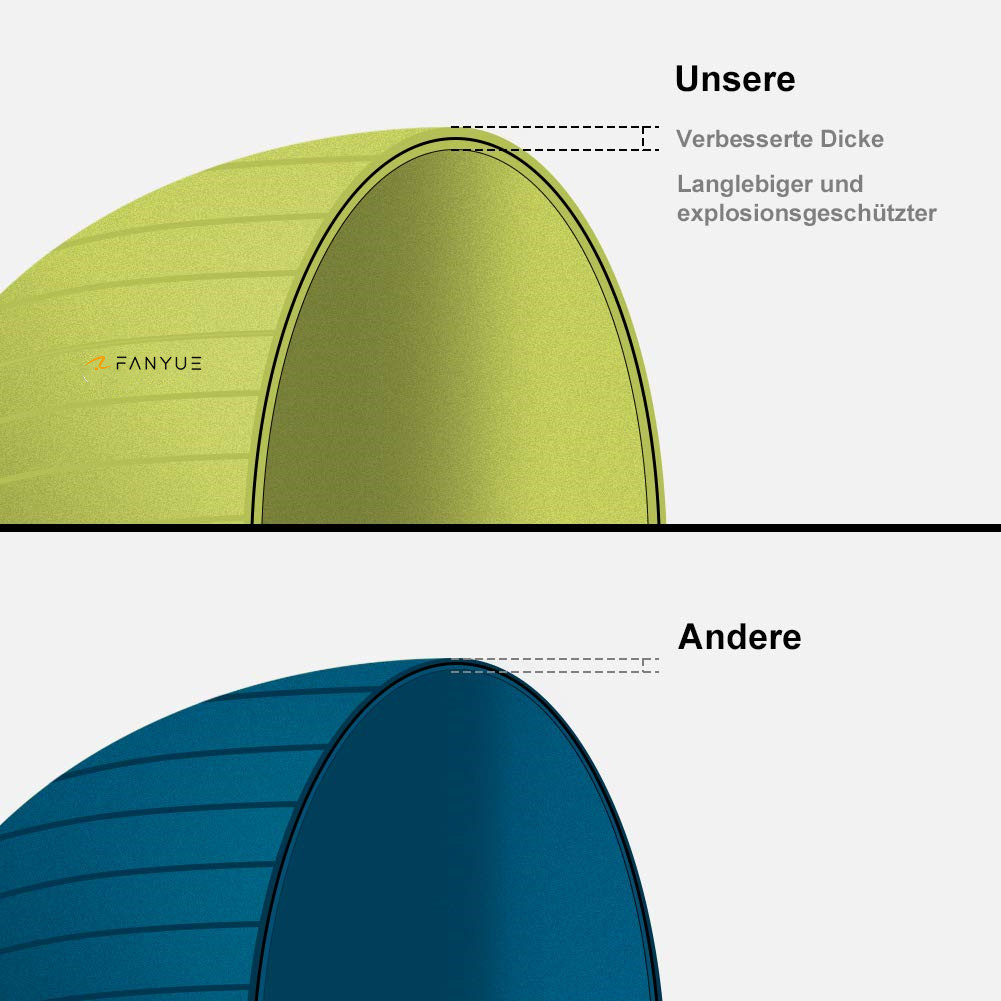
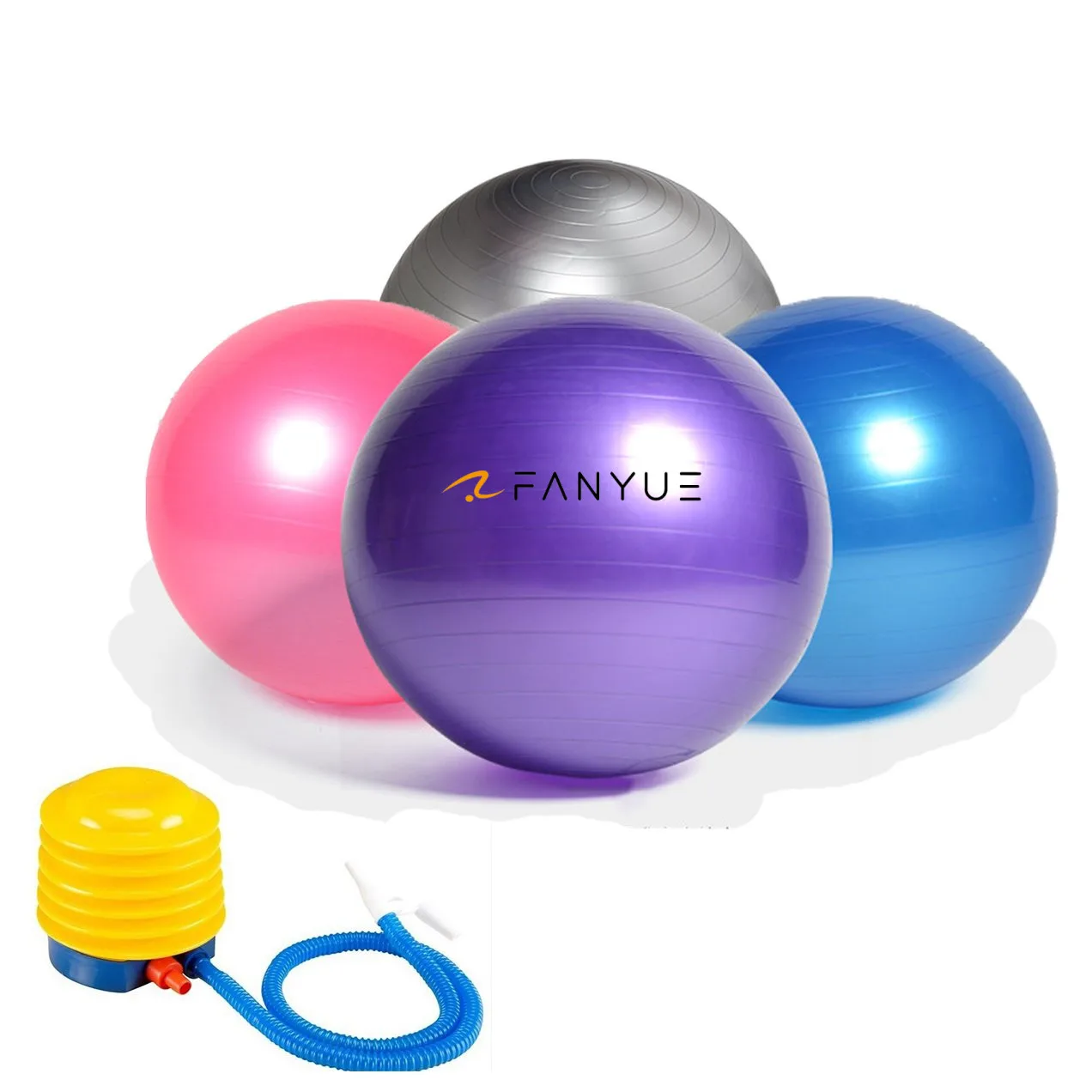
Choosing the correct yoga ball size is critical for postural benefit. A yoga ball that is too small causes the hips to drop below the knees during seated use, tilting the pelvis posteriorly and negating the lumbar support benefit. A yoga ball that is too large creates excessive anterior pelvic tilt. As a general guideline, the correct yoga ball size allows the hips and knees to rest at approximately a ninety-degree angle when seated. For most adults, this means a yoga ball diameter of fifty-five to sixty-five centimeters. Quality also matters — an anti-burst yoga ball made from durable PVC provides the safety and consistency needed for reliable posture training.
FAQ
How long does it take to see posture improvements from yoga ball training?
Most people begin to notice subtle posture improvements within three to four weeks of consistent yoga ball training, typically two to three sessions per week. Meaningful structural changes in alignment — such as reduced forward head position and improved lumbar curve — generally develop over eight to twelve weeks of regular practice. Results depend on the frequency of use, exercise selection, and how consistently correct form is maintained during yoga ball sessions.
Can beginners use a yoga ball for posture training safely?
Yes, beginners can use a yoga ball safely with a few basic precautions. Starting with simple seated balance holds on the yoga ball before progressing to dynamic exercises allows the stabilizer muscles time to adapt. Using a yoga ball near a wall for initial support reduces fall risk and builds confidence. Selecting a properly sized, anti-burst yoga ball also ensures a stable and safe training surface as balance and core strength develop over time.
Is a yoga ball effective for correcting posture issues caused by desk work?
A yoga ball is particularly well-suited to addressing posture problems that arise from prolonged desk work. Sitting on a yoga ball for intervals throughout the workday actively engages the core and encourages the natural lumbar curve, counteracting the spinal compression of standard chair sitting. Pairing seated yoga ball use with targeted extension and strengthening exercises addresses both the mobility and strength deficits that desk-related posture problems create. The yoga ball effectively targets the exact postural patterns that sedentary work environments reinforce.