 EN
EN


Circuit training demands equipment that adapts quickly, travels easily, and challenges multiple muscle groups without slowing down the pace of a session. A resistance tube meets all of these demands with remarkable efficiency. Whether you are designing a gym-based circuit or a home workout routine, the resistance tube delivers functional resistance that scales to individual fitness levels while keeping transitions between stations smooth and fast.
The short answer to whether a resistance tube is useful for circuit training is a clear yes. A resistance tube provides scalable, full-body resistance that integrates seamlessly into timed circuits, station-based formats, and high-repetition training blocks. Beyond convenience, the resistance tube adds genuine mechanical challenge to movements that would otherwise rely solely on bodyweight, making it a serious training tool rather than a casual accessory. This article explains exactly why the resistance tube earns its place in circuit training, how to use it effectively, and what makes it different from other resistance options in a circuit setting.
Why a Resistance Tube Fits the Circuit Training Format
Portability and Fast Station Transitions
Circuit training depends on momentum. Every second spent adjusting equipment between stations reduces the cardiovascular and metabolic stimulus of the session. A resistance tube is lightweight, compact, and requires no weight loading or machine adjustment. A trainer or athlete can move from a resistance tube row to a resistance tube squat to a resistance tube press in seconds, keeping the heart rate elevated and the circuit intact. This speed of transition is one of the most practical advantages the resistance tube offers over free weights or cable machines in a circuit environment.
A resistance tube also anchors to doors, poles, and racks, giving it enormous flexibility in terms of station setup. You can design a circuit that covers pulling, pushing, hinging, and rotation movements using a single resistance tube set, without reorganizing a gym floor or occupying multiple equipment stations. This efficiency makes the resistance tube particularly valuable in small training spaces and group fitness settings where floor space is limited.
Scalable Resistance for Mixed-Level Groups
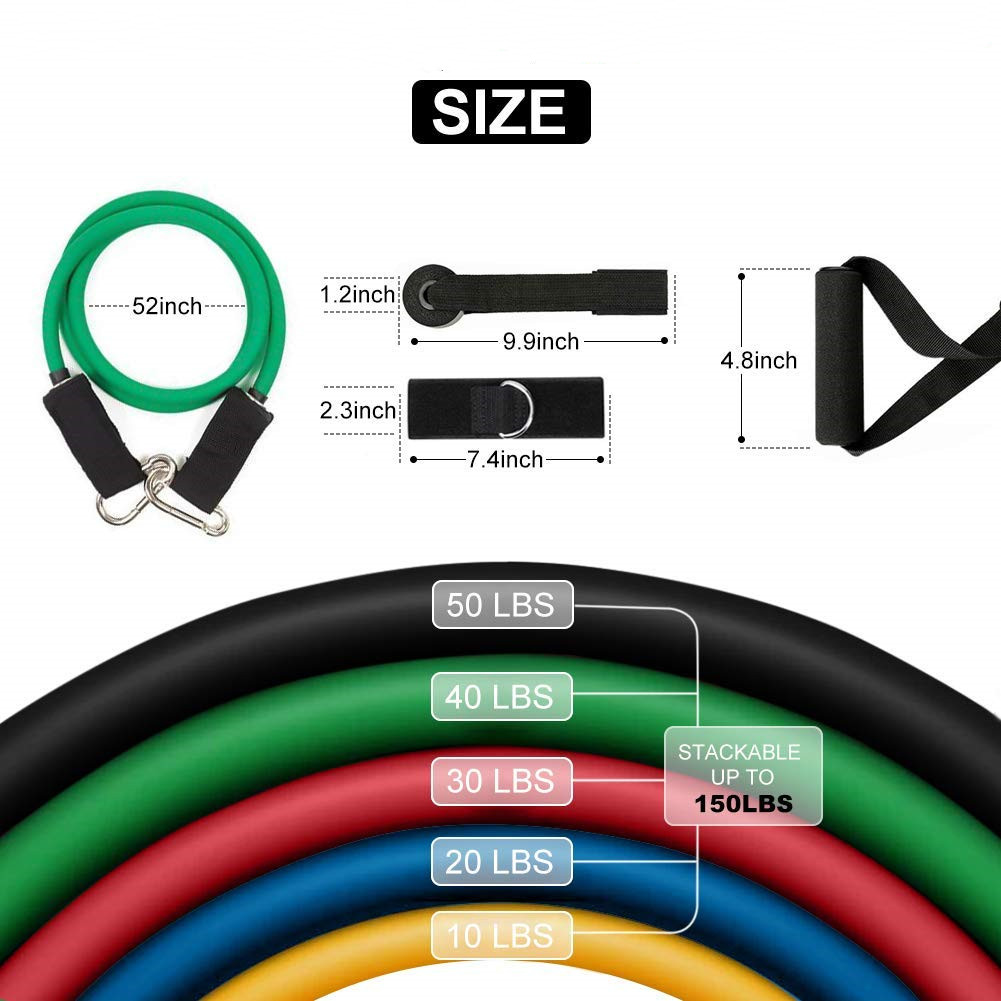
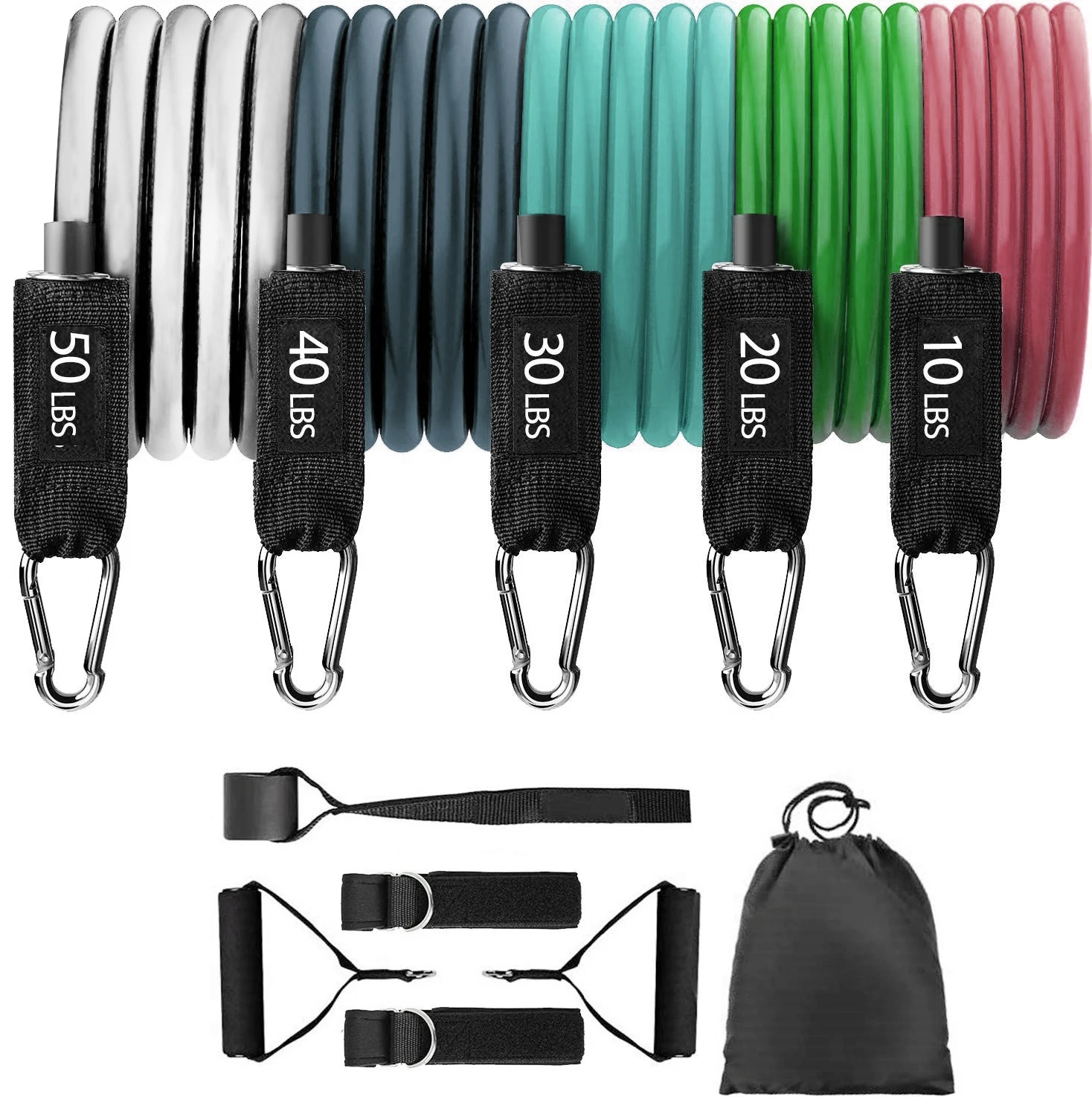
One of the greatest challenges in circuit training is accommodating participants at different strength levels. A resistance tube addresses this directly. Stackable resistance tube sets allow users to combine multiple tubes to increase load or work with a single tube for lighter resistance. A beginner using a resistance tube at low tension and an advanced athlete using a resistance tube at high tension can train simultaneously at the same station without equipment changes. This scalability makes the resistance tube a practical solution for personal trainers, group fitness instructors, and rehabilitation specialists running circuit sessions.
How to Integrate a Resistance Tube into Circuit Training Effectively
Pairing the Resistance Tube with Bodyweight Movements
The most effective circuit training programs combine the resistance tube with complementary bodyweight exercises. For example, a resistance tube chest press followed by push-ups creates a superset that pre-fatigues the pushing muscles and intensifies the overall stimulus. Similarly, a resistance tube deadlift paired with a bodyweight squat jump challenges the posterior chain while adding a plyometric cardiovascular element. Using the resistance tube in this paired format allows trainers to structure circuits that simultaneously build strength, improve endurance, and elevate metabolic output within a single session.
When building a resistance tube circuit, it helps to organize stations around movement patterns rather than individual muscles. A well-designed resistance tube circuit might rotate through a pull pattern, a push pattern, a hinge pattern, and a rotational pattern over four consecutive stations. This approach ensures balanced muscle engagement, reduces overuse fatigue in any single group, and keeps the resistance tube central to the workout structure rather than treating it as a supplementary tool.
Adjusting Resistance Tube Tension During the Session
Unlike fixed-weight equipment, a resistance tube provides variable tension that increases as the band stretches. This means the resistance tube creates greater challenge at the peak of a movement, which closely mirrors the natural strength curve in many exercises. For a bicep curl or shoulder press, the resistance tube delivers maximum load precisely where the joint is strongest, reducing injury risk while maintaining training stimulus. Trainers designing resistance tube circuits should account for this variable tension characteristic when selecting exercises and prescribing repetition ranges.
To manage fatigue across a resistance tube circuit, it is advisable to alternate between upper and lower body stations. This rotation allows one muscle group to recover while another is working, enabling athletes to sustain effort across six to ten resistance tube stations without excessive rest. The result is a high-density training session that builds both muscular endurance and cardiovascular fitness simultaneously.
What Makes the Resistance Tube Distinct in Circuit Training
Full-Body Engagement with a Single Tool
Few pieces of equipment can drive full-body engagement as broadly as the resistance tube. From lateral band walks for glute activation to overhead tricep extensions, from resistance tube rows for the upper back to resisted lunges for the lower body, a single resistance tube covers nearly every major movement plane. This breadth of application means a trainer can design an entire circuit using only resistance tube exercises without sacrificing variety or movement quality. For commercial gyms, training studios, or outdoor fitness programs, this versatility reduces equipment cost while maximizing programming options.
Low Impact and Joint-Friendly Resistance
Another distinguishing quality of the resistance tube in a circuit context is its joint-friendly resistance profile. Because resistance tube exercises involve elastic tension rather than gravitational load, the compressive force on joints is significantly lower than with free weights. This makes the resistance tube especially valuable in circuits designed for older adults, post-rehabilitation clients, or athletes in the recovery phase of periodization. A resistance tube circuit can deliver meaningful training stimulus without the joint stress that heavy barbell or dumbbell circuits may cause. Trainers working with diverse populations can use the resistance tube to run effective circuits that remain safe across a wide range of physical conditions.
FAQ
How many resistance tube exercises can you include in a single circuit session?
A well-structured resistance tube circuit typically includes between four and eight exercises per round. The ideal number depends on session duration, the fitness level of participants, and whether the resistance tube is used alone or paired with bodyweight movements. Most trainers find that six resistance tube stations provide enough variety to challenge all major muscle groups while keeping the session within thirty to forty-five minutes.
Can a resistance tube replace dumbbells entirely in circuit training?
A resistance tube can replace dumbbells for many circuit training exercises, particularly those involving pressing, pulling, curling, and extension patterns. However, for movements that rely on gravitational load and inertia, such as weighted carries or heavy squats, the resistance tube behaves differently. In most circuit training applications, a resistance tube is a highly effective alternative to dumbbells and in some cases offers advantages in terms of portability, scalability, and joint safety.
What resistance tube tension level is appropriate for circuit training beginners?
Beginners starting resistance tube circuit training should use light to medium tension, typically between ten and twenty pounds of combined resistance. A stackable resistance tube set allows newcomers to start with a single light tube and gradually add resistance as strength and movement patterns improve. It is more important for beginners to prioritize correct form with a resistance tube than to maximize tension, as proper mechanics protect joints and build a foundation for progressive overload over time.