 EN
EN


When building a home fitness routine on a budget, the yoga ball stands out as one of the most versatile and cost-effective tools available. Also known as a stability ball or exercise ball, a yoga ball challenges your body in ways that flat surfaces simply cannot. By introducing an unstable base, a yoga ball forces your core, legs, and back muscles to engage continuously, making even simple movements significantly more effective for building functional strength.
The short answer is yes — a yoga ball is genuinely effective for home fitness routines, provided it is used correctly and consistently. A yoga ball is not a gimmick or a trend that fades after a few months. Fitness professionals, physiotherapists, and personal trainers consistently recommend the yoga ball as a foundational tool for improving posture, core stability, balance, and overall body conditioning. Whether you are a beginner or an experienced exerciser, integrating a yoga ball into your daily routine delivers measurable physical benefits that compound over time.
Core and Stability Benefits of a Yoga Ball
Why the Yoga Ball Activates Your Core
The primary reason a yoga ball is so effective is its ability to activate deep stabilizer muscles that standard floor exercises often miss. When you sit, lie, or balance on a yoga ball, your body must constantly make micro-adjustments to maintain equilibrium. This continuous stabilization engages the transverse abdominis, obliques, and lower back muscles simultaneously. Over time, consistent yoga ball training builds a strong, resilient core that supports better posture and reduces the risk of lower back pain.
A yoga ball also allows you to perform standard exercises such as crunches, planks, and bridges with dramatically increased muscle recruitment. A basic crunch performed on a yoga ball targets a fuller range of motion compared to the same movement on the floor. This means each yoga ball repetition delivers greater muscular engagement per movement, improving your training efficiency without requiring additional time or equipment.
Postural Improvement Through Yoga Ball Training
Many home workers and desk-based professionals use a yoga ball as an active sitting tool. Replacing your office chair with a yoga ball during periods of work encourages an upright spinal position because slouching on a yoga ball naturally causes instability. Regular yoga ball sitting strengthens the postural muscles of the mid and lower back, helping counteract the negative effects of prolonged sedentary behavior. Even short sessions of yoga ball sitting throughout the day accumulate meaningful postural benefits over weeks of consistent practice.
Versatility of the Yoga Ball in Home Workouts
Full-Body Exercises You Can Do with a Yoga Ball
A yoga ball supports a wide spectrum of full-body exercises, making it an efficient single-piece tool for home fitness. You can use a yoga ball for hamstring curls, wall squats, push-up variations, hip bridges, and overhead pressing exercises. Each of these yoga ball movements introduces an element of instability that heightens muscle activation compared to their flat-surface equivalents. For individuals who want a complete workout without purchasing multiple machines or weights, a yoga ball provides a surprisingly comprehensive training stimulus.
Yoga ball exercises are also highly adaptable to different fitness levels. A beginner can use a yoga ball for gentle stretching and foundational core activation, while an advanced exerciser can incorporate a yoga ball into dynamic movement patterns and high-intensity circuits. This range of adaptability means a yoga ball remains a relevant training tool as your fitness level progresses, unlike single-purpose equipment that quickly becomes too easy or too limited.
Yoga Ball for Flexibility and Recovery
Beyond strength training, a yoga ball is highly effective for flexibility work and active recovery. Rolling over a yoga ball gently mobilizes the thoracic spine, a region that often becomes stiff from prolonged sitting. Using a yoga ball for supported backbends and hip flexor stretches allows you to achieve deeper, safer stretches than are possible on the floor alone. Incorporating yoga ball stretching into your cooldown routine accelerates muscle recovery and reduces next-day soreness, extending the productive life of your training week.
Choosing and Using a Yoga Ball at Home
Selecting the Right Yoga Ball Size and Quality
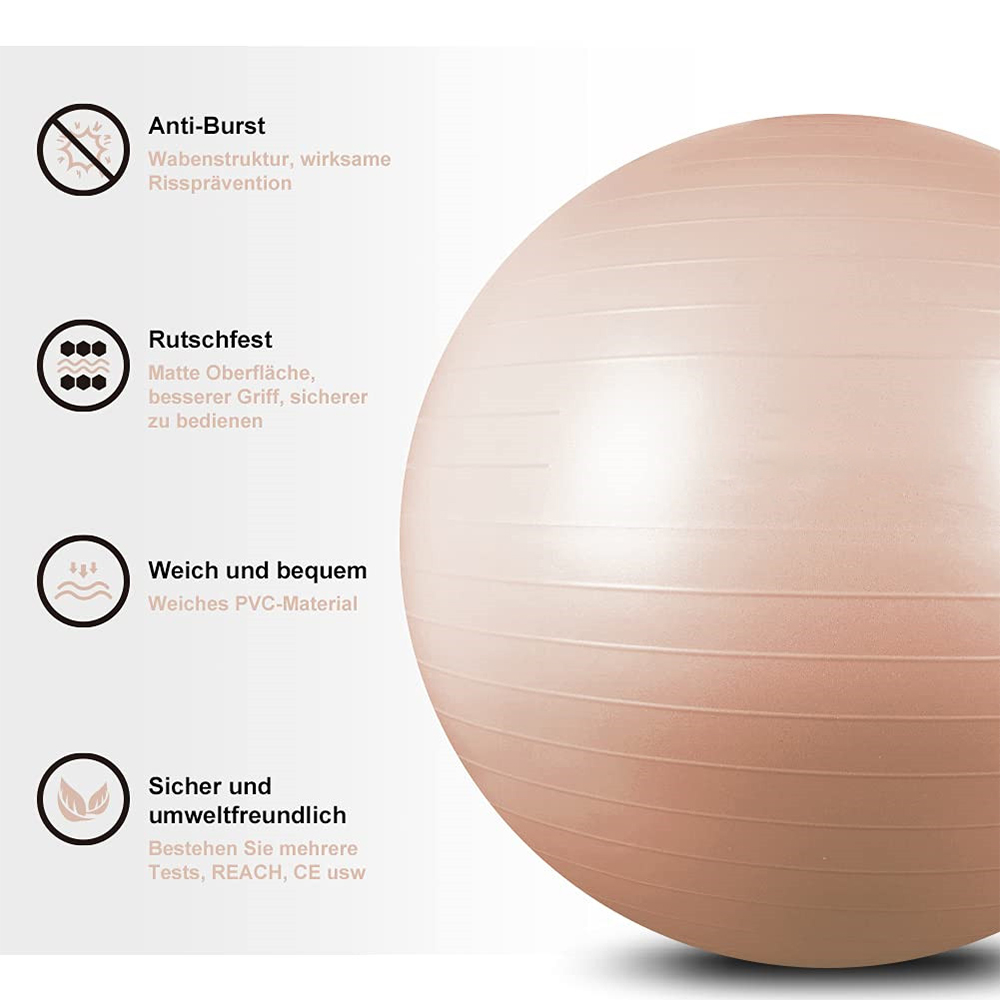
To get the most from a yoga ball at home, selecting the correct size is essential. A yoga ball that is too large or too small compromises both safety and exercise effectiveness. As a general guideline, when seated on a yoga ball, your hips and knees should form approximately a ninety-degree angle. Yoga ball sizes typically range from fifty-five centimeters to seventy-five centimeters in diameter, with the appropriate size depending on your height. Investing in an anti-burst yoga ball made from high-quality PVC ensures the yoga ball can withstand rigorous daily use without sudden deflation, which is a critical safety consideration for unsupervised home training.
A non-slip surface texture is another important feature to look for in a yoga ball. A textured yoga ball provides better grip during dynamic exercises, reducing the risk of slipping and allowing you to maintain correct form throughout each movement. Quality yoga ball construction also includes the ability to inflate and deflate the yoga ball to your preferred firmness, giving you control over the challenge level of your exercises.
Building a Consistent Yoga Ball Routine
Consistency is the key factor in making a yoga ball effective for your home fitness goals. A yoga ball used occasionally will deliver limited results, but a yoga ball incorporated into a structured weekly routine becomes a powerful conditioning tool. Beginning with three yoga ball sessions per week, each lasting twenty to thirty minutes, provides sufficient stimulus for measurable improvement in core strength and balance within four to six weeks. As your body adapts, progressively increasing the complexity and duration of your yoga ball sessions ensures continued progress.
Pairing a yoga ball routine with basic cardiovascular activity and adequate nutrition creates a complete home fitness strategy. A yoga ball on its own addresses strength, stability, and flexibility effectively, but integrating it within a broader routine maximizes the overall fitness return on your investment of time and effort.
FAQ
How often should I use a yoga ball for fitness results?
Using a yoga ball three to four times per week is sufficient for most individuals to notice improvements in core strength, balance, and posture within four to six weeks. Consistency matters more than session length, so shorter regular yoga ball sessions outperform infrequent long sessions.
Is a yoga ball safe for beginners at home?
Yes, a yoga ball is one of the safest home fitness tools for beginners when used correctly. Starting with foundational yoga ball exercises on a firm, non-slip surface and ensuring the yoga ball is properly inflated minimizes risk. Beginners should choose a high-quality anti-burst yoga ball for added safety during unsupervised training sessions.
Can a yoga ball replace a gym membership for home training?
A yoga ball can replace many gym-based exercises for individuals focused on core conditioning, flexibility, and bodyweight strength training. While a yoga ball does not replicate heavy resistance training equipment, it provides a comprehensive and effective home workout solution for the majority of general fitness goals without any ongoing membership costs.