 EN
EN



If you have ever watched a fitness coach warm up a client before squats or lunges, you have almost certainly seen a hip band wrapped around the thighs. This small but powerful tool has earned a permanent place in professional training programs because it delivers targeted muscle activation that free weights and machines alone cannot replicate. The hip band forces the glutes, hip abductors, and stabilizing muscles to engage from the very first repetition, making every movement more purposeful and more effective.
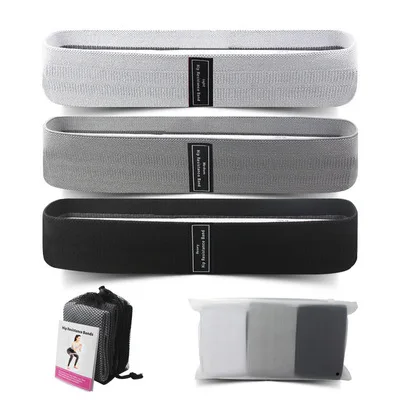
Fitness coaches recommend the hip band not as a trend but as a scientifically grounded strategy for building lower body strength safely and efficiently. Whether the client is an athlete recovering from injury, a beginner learning movement patterns, or an advanced lifter breaking through a plateau, the hip band fits every training stage. Understanding why professionals place such value on this tool helps athletes and everyday gym-goers use it with greater intention and better results.
The Muscle Activation Science Behind the Hip Band
How the Hip Band Targets the Glutes and Abductors
The primary reason coaches rely on the hip band is its ability to create consistent lateral resistance throughout a movement. When placed just above the knees, the hip band generates constant tension that the gluteus medius and gluteus maximus must work against during every phase of a squat, step, or bridge. This resistance pattern is difficult to replicate with any other piece of equipment, which is why the hip band has become a staple in lower body programming.
Research in exercise science confirms that adding a hip band to bodyweight movements significantly increases electromyographic activity in the glute muscles compared to performing the same exercises without one. This means the hip band is not just a warm-up prop but a genuine strength stimulus. Coaches use the hip band to ensure that athletes are not relying too heavily on the quadriceps and neglecting the posterior chain, which is a common compensation pattern that leads to imbalances and injury over time.
Hip Band Use for Knee Alignment and Movement Quality
Beyond muscle activation, the hip band serves a critical role in correcting knee valgus, which is the inward collapse of the knees during loaded movements. When a hip band is worn during squats or lunges, the athlete must actively push their knees outward against the resistance. This teaches proper knee tracking in real time, reinforcing a movement pattern that protects the knee joint under heavy load. Coaches use the hip band as both a corrective tool and a strength builder simultaneously, making it exceptionally efficient in a training session.
Progressive Lower Body Strength Training with the Hip Band
Building Strength from Beginner to Advanced Levels
One of the most valued qualities of the hip band is its scalability. Coaches recommend the hip band because it can be used across all fitness levels without requiring complex equipment adjustments. For beginners, a light-resistance hip band introduces the concept of hip hinge mechanics and glute engagement in a low-risk environment. For intermediate athletes, a medium hip band adds meaningful resistance to bodyweight squats, lateral band walks, and clamshells. For advanced lifters, a heavy-resistance hip band can be layered onto barbell movements to amplify glute demand at the top of each rep.
This progression model means the hip band grows with the athlete. Coaches appreciate that a single hip band or a set of hip band options can replace an entire rack of isolation machines for targeting the hips and glutes. The hip band also travels easily, making it a reliable training tool for clients who work out at home, travel frequently, or train outdoors. The versatility of the hip band removes barriers to consistent lower body training.
Core Exercises Where the Hip Band Delivers Maximum Value
Fitness professionals program the hip band into a wide range of exercises that collectively build strong, balanced lower bodies. Hip band squats teach athletes to maintain an active, wide knee position while loading the glutes through a full range of motion. Hip band glute bridges isolate the gluteus maximus with impressive precision, especially when combined with a controlled tempo. Lateral hip band walks strengthen the hip abductors, which are often underdeveloped and directly linked to knee, hip, and lower back pain. Donkey kicks performed with a hip band add resistance to the glute kickback, improving both strength and muscle definition. Each of these hip band movements contributes to a comprehensive lower body program without requiring a gym full of machines.
Why the Hip Band Matters for Injury Prevention and Recovery
Protecting the Hips and Knees Through Stronger Stabilizers
Coaches who work with injury-prone athletes or clients returning from surgery frequently turn to the hip band as a rehabilitation and prevention tool. Weak hip abductors and external rotators are associated with a range of common injuries including IT band syndrome, patellofemoral pain, and lower back strain. The hip band specifically targets these stabilizing muscle groups, helping athletes build the foundational strength needed to support larger compound lifts and high-impact activities. Using a hip band consistently over weeks and months creates a protective layer of muscular support around the knee and hip joints.
Hip Band Integration in Warm-Up and Activation Protocols
A hip band warm-up sequence is now a standard practice in professional sports and personal training environments alike. Before any lower body session, coaches use the hip band to prime the nervous system and increase blood flow to the glutes. This activation step ensures that when heavier loads are introduced, the target muscles are already firing correctly. Without a proper hip band activation, the body often defaults to dominant muscle groups like the quads and hamstrings, leaving the glutes underworked even during exercises that are supposed to target them. A hip band warm-up takes only five to ten minutes but dramatically improves the quality of the entire training session that follows.
FAQ
How often should I use a hip band in my training routine?
Most fitness coaches recommend incorporating the hip band into every lower body session, either as part of the warm-up or as a resistance tool during working sets. Using the hip band consistently two to four times per week allows the glutes and hip stabilizers to develop strength progressively without overloading the muscles.
What resistance level hip band should beginners start with?
Beginners should start with a light or medium resistance hip band that allows clean movement form throughout each exercise. A hip band that is too heavy will cause compensations in technique, which defeats the purpose of using the tool. As strength and coordination improve, progressing to a heavier hip band ensures continued adaptation and growth.
Can the hip band replace gym machines for lower body training?
For many foundational lower body goals, including glute activation, hip abductor strengthening, and knee alignment training, a hip band can effectively substitute for dedicated machines. While the hip band may not replicate the maximum load of a leg press or seated abductor machine, it provides functional strength training that translates more directly to real-world movement patterns and athletic performance.